
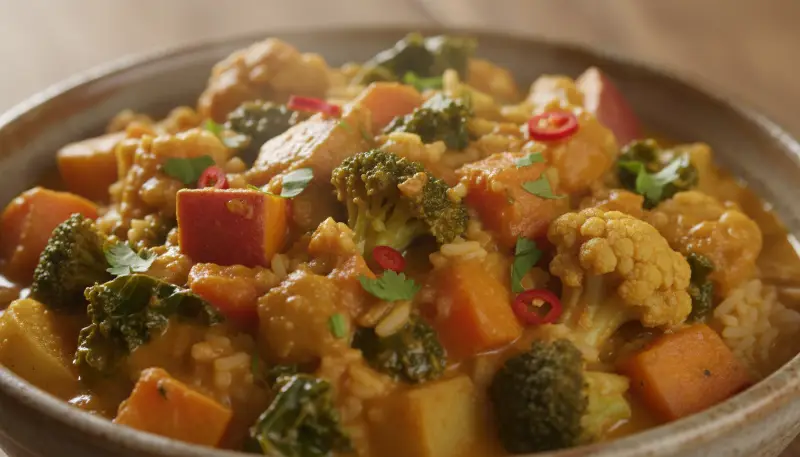
This Winter Vegetable Curry with tender beef is the definitive answer to chilly evenings, providing a rich, nutrient-dense meal that warms from the inside out. By combining peak-season root vegetables with slow-cooked protein, you create a symphony of flavors that define winter comfort at its finest.
Hearty Winter Vegetable Curry with Beef
20 MIN
100 MIN
6 PERS
Ingredients
- 1 1.5 lbs beef chuck roast cut into cubes
- 2 2 large carrots peeled and sliced
- 3 2 parsnips peeled and chopped
- 4 1 small butternut squash cubed
- 5 2 tablespoons mild curry powder
- 6 2 cups beef broth low sodium
- 7 1/4 cup apple juice for deglazing
- 8 1 can unsweetened coconut milk
Instructions
- 1 Brown the beef cubes in a large pot until caramelized
- 2 Sauté onions garlic and ginger with curry spices
- 3 Deglaze the pot with apple juice and beef broth
- 4 Simmer the beef for 45 minutes before adding vegetables
- 5 Add carrots parsnips and squash then cook until tender
- 6 Stir in coconut milk and serve over rice
The Allure of the Perfect Winter Vegetable Curry
When the temperature drops and the days grow shorter, the culinary world shifts its focus toward warmth and sustainability. A Winter Vegetable Curry is more than just a meal, it is a ritual of preservation and comfort. The combination of earthy root vegetables, which have spent months absorbing minerals from the soil, and the robust profile of beef creates a dish that feels ancestral. This specific iteration of Winter Vegetable Curry focuses on the harmony between the natural sweetness of winter crops and the savory depth of beef chuck roast.
Preparing a Winter Vegetable Curry allows you to utilize the sturdiest produce available during the frost months. Vegetables like parsnips and rutabagas are often overlooked in summer, but in a Winter Vegetable Curry, they become the stars. These vegetables are high in fiber and complex carbohydrates, providing the slow-burning energy needed for colder climates. When you simmer these ingredients in a rich coconut and beef broth base, they absorb the complex notes of turmeric, cumin, and coriander, transforming into tender morsels of gold.
Why Beef is the Superior Protein for Winter Vegetable Curry
While many curries utilize chicken or lentils, a true Winter Vegetable Curry benefits immensely from the inclusion of beef. Beef chuck, often referred to as stewing beef, contains significant amounts of connective tissue and marbling. During the long simmering process required for a Winter Vegetable Curry, this collagen breaks down into gelatin, thickening the sauce and providing a luxurious mouthfeel.
We specifically choose beef over lighter proteins because it matches the “weight” of winter vegetables. A carrot or a potato can withstand an hour of cooking without disintegrating, and the beef provides a savory counterpoint to the sweetness of the carrots and parsnips. By avoiding other fatty meats and focusing strictly on high-quality beef, we ensure a clean, rich flavor that complements the spice profile. If you are preparing a large batch of Winter Vegetable Curry, using a Cuisinart 8 Cup Food Processor to quickly dice your aromatics will save significant time during the prep phase.

The Secret to Alcohol-Free Deglazing in Winter Vegetable Curry
Many traditional European-influenced stews use wine to deglaze the pot, adding acidity and complexity. However, for those following strict dietary requirements or simply looking to avoid spirits, a Winter Vegetable Curry can achieve the same depth of flavor using clever substitutions. In our recipe, we utilize a combination of beef broth and apple juice. The apple juice provides the necessary sugars and acidity that mimic the profile of a white wine, while the beef broth anchors the flavor in savoriness.
When you sear the beef for your Winter Vegetable Curry, it leaves behind a layer of caramelized proteins known as the “fond.” This fond is where the most intense flavor resides. By pouring in a splash of apple juice, you can scrape those bits back into the liquid, ensuring that your Winter Vegetable Curry has a dark, complex backbone. For a perfectly smooth texture in your base sauce, you might consider using the Ninja BN751 Professional Plus DUO Blender to pulse together your ginger, garlic, and onions into a fine paste before sautéing.
Exploring the Root Vegetables of Winter Vegetable Curry
What truly defines a Winter Vegetable Curry is the selection of the vegetables themselves. Each root vegetable brings a different texture and flavor profile to the pot:
1. **Parsnips:** Often sweeter than carrots after a frost, they add a nutty undertone to the Winter Vegetable Curry.
2. **Carrots:** These provide a classic sweetness and a pop of color that resists fading during the long cook time.
3. **Butternut Squash:** As it breaks down, it creates a creamy consistency that thickens the Winter Vegetable Curry without the need for flour.
4. **Rutabaga or Turnip:** These add a slightly peppery, earthy bite that balances the richness of the coconut milk.
To ensure your vegetables are cooked to perfection, you can even use a Cosori 9-in-1 TurboBlaze Air Fryer 6 Qt to pre-roast them. Roasting the vegetables before adding them to the Winter Vegetable Curry intensifies their sugars and keeps them from becoming overly mushy in the broth.
Techniques for the Perfect Winter Vegetable Curry
The process of building a Winter Vegetable Curry is additive. You must start with the aromatics. Onions should be cooked until they are translucent, followed by ginger and garlic. The spices must be “bloomed” in the oil, which means heating them until they become fragrant but not burnt. This activates the essential oils in the curry powder and turmeric, ensuring that your Winter Vegetable Curry has a professional-level depth of flavor.
Once the aromatics are ready, the beef returns to the pot. This is a slow-cooking journey. A Winter Vegetable Curry cannot be rushed, the beef needs time to soften. If you try to eat it too early, the protein will be tough. Patience is the most important ingredient in a Winter Vegetable Curry. While the pot simmers, you can organize your kitchen or prepare your storage solutions. Using the Rubbermaid Brilliance Glass Storage Set of 9 is a fantastic way to portion out your Winter Vegetable Curry for the week ahead, as the flavors actually improve after a day in the refrigerator.
Long-Term Storage and Meal Prepping Your Curry
One of the greatest benefits of a Winter Vegetable Curry is its ability to be stored and frozen. Because root vegetables and beef are both structurally sound, they do not lose their integrity during the freezing and thawing process. If you find yourself with a massive surplus of Winter Vegetable Curry, the FoodSaver Vacuum Sealer Machine is an invaluable tool. Vacuum sealing portions of your Winter Vegetable Curry prevents freezer burn and keeps the flavors fresh for months.
When reheating, it is best to do so slowly on the stovetop. Adding a small splash of beef broth can help loosen the sauce, as the starches from the potatoes and squash will have thickened it significantly while cold. This Winter Vegetable Curry is a gift that keeps on giving, making it the perfect choice for busy families or solo meal-preppers who want high-quality nutrition throughout the work week.
For more seasonal inspiration and a full list of our kitchen-tested meals, visit our [sitemap](https://www.foodzrecipes.com/post-sitemap.xml) to browse our extensive collection.
Can I make this Winter Vegetable Curry in a slow cooker?
Yes, you can. Simply sear the beef and sauté the aromatics first, then place everything except the coconut milk and kale into a slow cooker for 6-8 hours on low. Stir in the coconut milk at the very end.
What is the best cut of beef for this recipe?
Beef chuck roast is the gold standard for Winter Vegetable Curry because of its fat content and ability to become tender during a long simmer. Stew meat packs are also a great, convenient option.
How do I make the curry spicier?
If you want more heat in your Winter Vegetable Curry, add a teaspoon of red chili flakes or a fresh chopped bird’s eye chili during the aromatic sauté stage.
Why do you use apple juice instead of water?
Apple juice provides a subtle acidity and sweetness that balances the heavy spices of the Winter Vegetable Curry, acting as a non-alcoholic replacement for traditional deglazing liquids.
Is Winter Vegetable Curry freezer-friendly?
Absolutely. The beef and root vegetables hold up perfectly. Just ensure the Winter Vegetable Curry is completely cool before sealing it in an airtight container or vacuum bag.