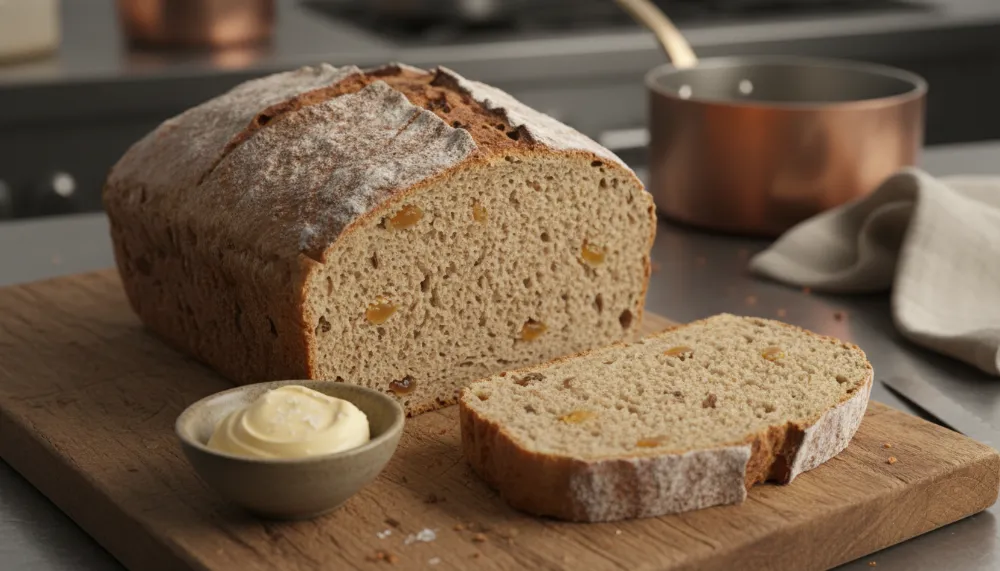
Experience the rustic charm of a classic loaf that requires no yeast and zero rising time, bringing the warmth of an Irish hearth straight to your kitchen. This Whole Wheat Irish Soda Bread is a dense, nutritious staple perfect for pairing with hearty stews or a simple smear of grass-fed butter.
Traditional Whole Wheat Irish Soda Bread
Ingredients
- 1 3.5 Cups Stone-Ground Whole Wheat Flour
- 2 1/2 Cup All-Purpose Flour (plus extra for dusting)
- 3 1 Teaspoon Baking Soda (Bicarbonate of Soda)
- 4 1 Teaspoon Fine Sea Salt
- 5 2 Tablespoons Chilled Unsalted Butter (cubed)
- 6 1.75 Cups Real Buttermilk (shaken well)
- 7 1 Tablespoon Honey or Maple Syrup (optional)
Instructions
- 1 Preheat your oven to 425°F (218°C) and lightly grease a baking sheet or cast-iron skillet.
- 2 In a large mixing bowl, whisk together the whole wheat flour, all-purpose flour, salt, and baking soda until perfectly combined.
- 3 Add the chilled butter cubes and use your fingertips to rub the butter into the flour until it resembles coarse crumbs.
- 4 Make a well in the center and pour in the buttermilk and honey. Use a wooden spoon or your hand to gently bring the dough together.
- 5 Turn the dough onto a floured surface and shape into a round loaf about 1.5 inches thick. Do not over-knead.
- 6 Transfer to the skillet and cut a deep cross (about 1 inch deep) across the top of the loaf.
- 7 Bake for 15 minutes at 425°F, then reduce the heat to 400°F and bake for another 20-25 minutes until the bottom sounds hollow when tapped.
The Rich Heritage of Whole Wheat Irish Soda Bread
Whole wheat Irish soda bread, often referred to in Ireland as “Brown Soda Bread” or “Wheaten Bread,” is more than just a side dish, it is a cultural icon. Born out of necessity in the early 19th century, this bread represents the resilience and ingenuity of the Irish people. When bicarbonate of soda became widely available in the 1830s, it revolutionized home baking in a country where the climate was poorly suited for the hard wheat required for yeast leavening.
Unlike the vast, golden wheat fields of central North America, Ireland’s soil and damp weather favored “soft wheat.” This variety is naturally lower in gluten protein, making it difficult for yeast to create a structured rise. However, soft wheat is the ideal candidate for chemical leavening. The reaction between acidic buttermilk and alkaline baking soda creates carbon dioxide bubbles that expand quickly in the heat of a bastible (a cast-iron pot), allowing for a dense but tender loaf without the need for hours of proofing.
Historical Origins: From Hearth to Modern Table
The first recorded recipe for soda bread appeared around 1836. During the devastating years of the Great Famine in the 1840s, this bread became a primary source of sustenance. Because it required only four inexpensive, non-perishable ingredients, whole-meal flour, salt, baking soda, and soured milk, it could be prepared daily by families with very limited resources.
The traditional method of baking involved a hearth fire. The loaf would be placed in a heavy pot with a recessed lid, which could hold glowing turf coals on top to provide even heat from all directions. This “Dutch Oven” style of baking is why many modern enthusiasts still prefer using a seasoned cast-iron skillet to achieve that signature thick, crunchy crust. 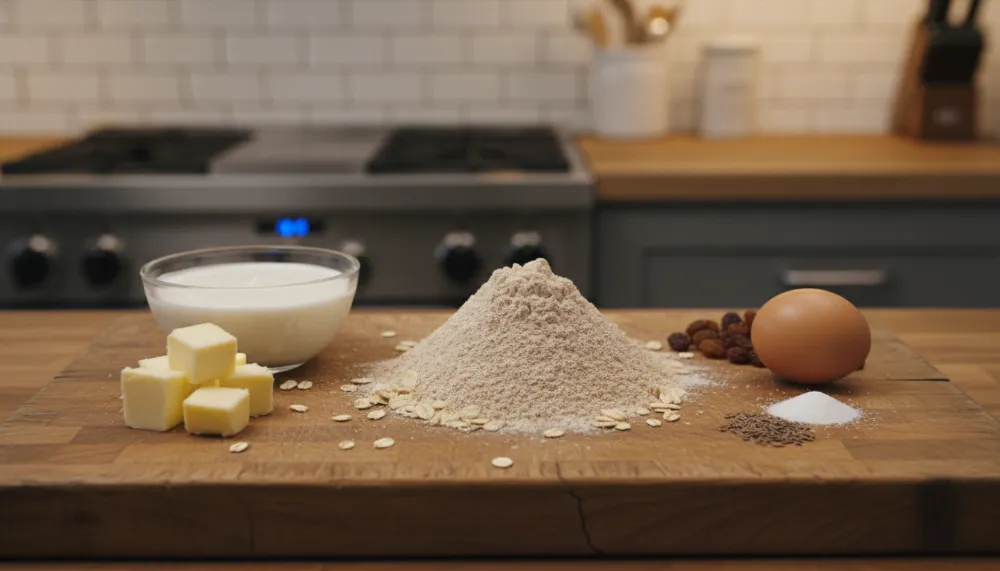
The Meaning Behind the Cross
You will rarely see a loaf of Whole Wheat Irish Soda Bread without a deep cross slashed into the top. While folklore suggests this was to “let the fairies out” to prevent them from cursing the bread, the practical reason is far more scientific. The deep cuts allow the center of the dense dough to expand as the steam and gases build up, preventing the loaf from cracking haphazardly. Furthermore, the cross allowed the bread to be easily broken into four quarters, or “farls,” which were the perfect size for a morning meal.
Nutritional Profile of Whole Wheat Irish Soda Bread
Choosing whole wheat over white flour significantly boosts the nutritional density of your loaf. The inclusion of the wheat germ and bran provides essential fiber and minerals that are often lost in highly processed breads.
| Nutrient | Amount (per 57g) | % Daily Value (DV) |
|---|---|---|
| Calories | 190 kcal | 10% |
| Total Fat | 2.2g | 3% |
| Dietary Fiber | 4.5g | 18% |
| Protein | 6g | 12% |
| Iron | 2.1mg | 12% |
Professional Tips for the Perfect Crumb
Achieving the perfect texture in a Whole Wheat Irish Soda Bread requires a gentle touch. One of the most common mistakes is over-working the dough. Unlike yeast breads that require kneading to develop gluten, soda bread relies on the immediate chemical reaction of the baking soda. If you knead it too much, you will crush those precious air bubbles, resulting in a loaf that is more like a brick than a bread.
Essential Equipment Recommendations
- Ninja BN751 Professional Plus DUO Blender: https://amzn.to/3LCDyNR (Why Perfect: 1000W motor, perfect for making your own oat flour additions or blending seeds into the batter).
- Cosori 9-in-1 TurboBlaze Air Fryer 6 Qt: https://amzn.to/4hRWmVq (Why Perfect: Great for roasting seeds or nuts to add to your dough).
- Cuisinart 8 Cup Food Processor: https://amzn.to/47Nhbg8 (Why Perfect: Fast chopping of dried fruits or nuts for variations).
- Rubbermaid Brilliance Glass Storage Set of 9: https://amzn.to/4oD0YkY (Why Perfect: Ideal for keeping your whole wheat flour fresh and protected from moisture).
- FoodSaver Vacuum Sealer Machine: https://amzn.to/4qWgVnS (Why Perfect: Keeps extra loaves fresh in the freezer for months).
Variations and Professional Adaptations
While the basic recipe is extraordinary, many bakers enjoy adding their own signature touch. In professional kitchens, we often look for ways to enhance flavor without violating dietary principles.
The Seedy Loaf
Adding a mix of toasted sunflower seeds, pumpkin seeds, and caraway seeds adds a wonderful crunch and an earthy depth. Always toast your seeds first to release their essential oils, this small step makes a massive difference in the final aroma of the bread. 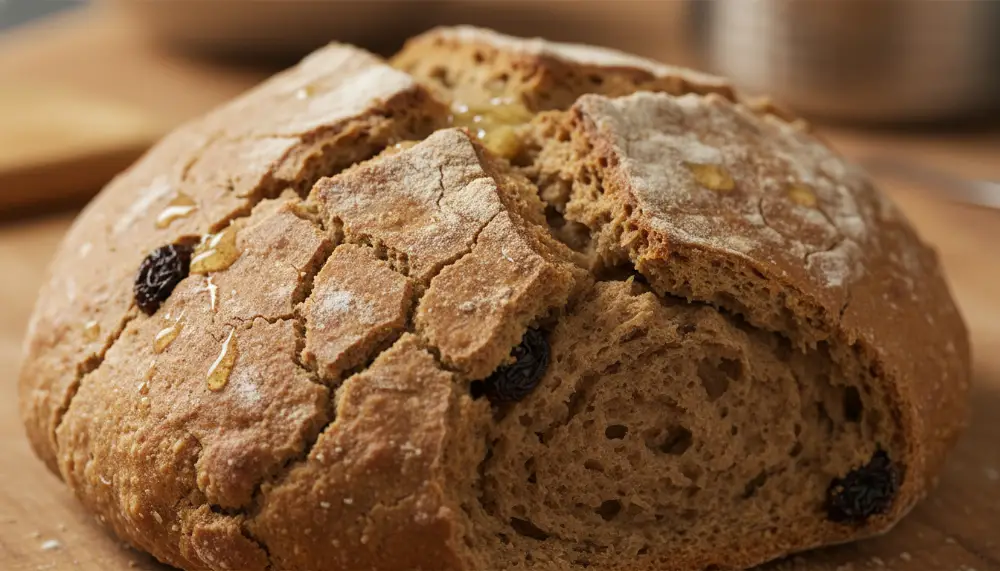
Sweetened Variations (The Spotted Dog)
Known traditionally as “Spotted Dog” or “Railway Cake,” this version includes currants or raisins. To keep the fruit plump and juicy, soak them in warm apple juice or orange juice for 20 minutes before folding them into the dough. This adds a subtle sweetness without the need for alcohol-based flavorings.
Savory Herb and Cheese
Fold in 1/2 cup of extra sharp white cheddar and a tablespoon of fresh rosemary. This version is particularly delicious when served alongside a hot bowl of beef and vegetable stew. Because we do not use pork products, ensure your cheese is made with vegetarian rennet if following strict dietary standards.
Buttermilk Science and Substitutions
Buttermilk is the “secret” ingredient that makes this bread rise. It contains lactic acid, which reacts with the sodium bicarbonate (baking soda). If you cannot find real buttermilk, you can create a professional-grade substitute by adding 1 tablespoon of apple cider vinegar or lemon juice to 1.75 cups of whole milk. Let it sit for 10 minutes until it slightly curdles before adding it to your dry ingredients.
Serving and Storage Suggestions
Whole Wheat Irish Soda Bread is best enjoyed warm, mere minutes after it leaves the oven. It has a relatively short shelf life compared to sourdough due to its lack of preservatives. If you have leftovers, wrap them tightly in a damp tea towel, this is a traditional trick to keep the crust from becoming too hard.
For long-term storage, slice the loaf once it has completely cooled. Use your FoodSaver Vacuum Sealer to seal individual portions. This prevents freezer burn and allows you to enjoy a slice of homemade bread whenever the craving strikes. To reheat, simply pop a slice in the toaster or warm it in your Cosori Air Fryer for 3 minutes at 350°F to restore that freshly-baked crunch.