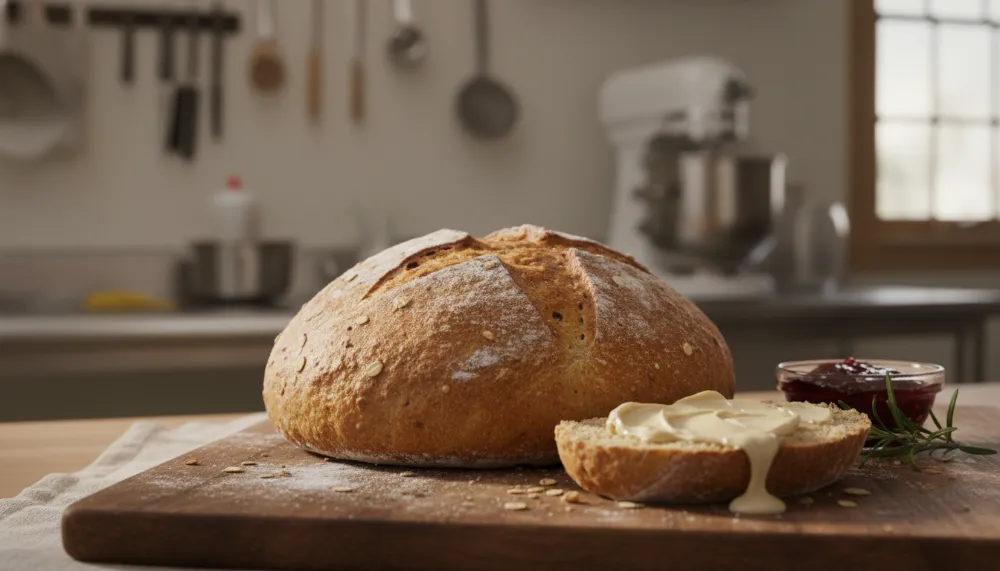
Experience the rustic charm of a traditional Irish bakery right in your plant-based kitchen. This Vegan Irish Soda Bread delivers a craggy, golden crust and a soft, tender interior without a drop of dairy or eggs.
Rustic Vegan Irish Soda Bread
Ingredients
- 1 4 cups All-Purpose Flour (or half whole-wheat)
- 2 1 1/2 tsp Baking Soda
- 3 1 tsp Fine Sea Salt
- 4 1 3/4 cups Unsweetened Soy Milk
- 5 1 tbsp Apple Cider Vinegar
- 6 2 tbsp Vegan Butter (Cold, Cubed)
- 7 1 tbsp Sugar (Optional)
Instructions
- 1 Preheat oven to 425°F (220°C) and lightly flour a baking sheet or cast iron skillet.
- 2 Whisk soy milk and apple cider vinegar; let sit for 10 minutes to create vegan buttermilk.
- 3 In a large bowl, whisk flour, baking soda, salt, and sugar. Cut in cold vegan butter using a pastry cutter or fork.
- 4 Make a well in the center and pour in the buttermilk. Mix gently with a wooden spoon until a shaggy dough forms.
- 5 Turn dough onto a floured surface. Shape into a round loaf (do not over-knead!). Cut a deep ‘X’ into the top.
- 6 Bake for 35–45 minutes until the loaf sounds hollow when tapped. Cool on a wire rack before slicing.
The Fascinating History of Irish Soda Bread
Vegan Irish Soda Bread is a plant-based evolution of a 19th-century staple. Born from necessity, it relies on a chemical reaction between an acid and a base rather than yeast, resulting in a dense, rustic loaf with a characteristic, craggy crust. The origins of Irish soda bread date back to the early-to-mid 1830s following the introduction of bicarbonate of soda (baking soda) to the United Kingdom. It was a product of necessity, Ireland’s unique climate was only suitable for growing “soft” wheat, which lacks the gluten strength required for traditional yeast-risen breads. Baking soda provided a reliable way to leaven this local flour.
During the 1840s, known historically as the Great Famine, the bread became a dietary pillar. Its popularity surged because the primary ingredients, flour, salt, baking soda, and sour milk (buttermilk), were affordable and widely available even during extreme hardship. Families would cook these loaves over open griddles or in heavy iron pots known as bastables. The signature “X” carved into the top has its own lore, traditionally, folklore suggested it was to “let the fairies out,” but the practical purpose was to allow the thick dough to expand and cook evenly in the center, preventing the core from remaining raw while the outside browned.
For those looking to prep their ingredients with precision, the Cuisinart 8 Cup Food Processor is a perfect tool for quickly cutting cold vegan butter into the flour, ensuring an even distribution that creates that sought-after crumb. It is a meal prep essential for any serious home baker.
The Science of the Rise: Vegan Buttermilk Explained
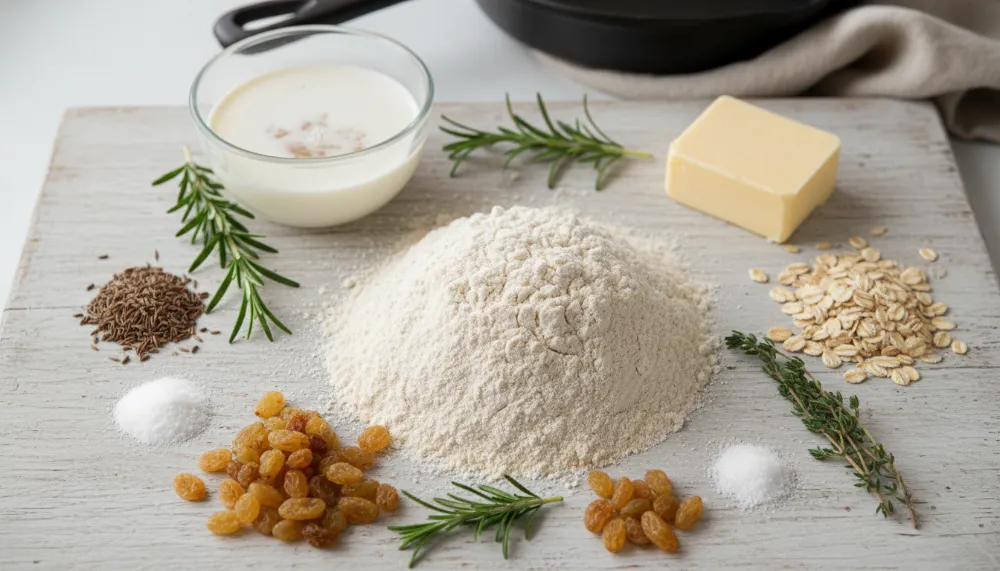
The magic of Vegan Irish Soda Bread lies in chemistry. Traditional recipes rely on the lactic acid in buttermilk to react with the alkaline baking soda. This reaction produces carbon dioxide bubbles that lift the heavy dough. To replicate this in a plant-based version, we utilize the power of acidulation. By adding apple cider vinegar or lemon juice to unsweetened plant milk, we create a curdled liquid that mimics the acidity and texture of dairy buttermilk.
While oat milk and almond milk can be used, high-protein soy milk is the professional choice. The proteins in soy milk react more similarly to dairy caseins, providing better structure and a deeper golden-brown finish through the Maillard reaction. If you want to emulsify your vegan buttermilk with herbs or liquid fats for a more uniform texture, the Ninja BN751 Professional Plus DUO Blender with its 1000W motor is incredibly effective at creating a perfectly smooth base.
Nutritional Profile of Vegan Irish Soda Bread
A standard vegan loaf made with fortified soy milk and whole-wheat flour provides a balanced profile of complex carbohydrates and plant-based protein. Unlike many modern white breads, it is relatively low in sugar and high in essential minerals like iron.
| Nutrient | Amount (per 100g approx.) |
|---|---|
| Calories | 290 kcal |
| Total Carbohydrates | 56g |
| Dietary Fiber | 2.6g |
| Protein | 6.6g |
| Total Fat | 5g |
| Iron | 2.7mg (34% DV) |
| Calcium | 81mg (8% DV) |
Professional Flavor Variations
Once you master the base recipe, you can elevate your bread with gourmet additions. Here are four chef-inspired variations:
- The Savory Garden: Incorporate 1/2 cup shredded vegan sharp cheddar, 2 tablespoons nutritional yeast, and fresh rosemary. This variation is incredible when toasted in a Cosori 9-in-1 TurboBlaze Air Fryer, which gives it a perfect crunch in minutes.
- The Citrus Orchard: Add 1 cup dried cranberries and 1 tablespoon orange zest. Replace a portion of the milk with orange juice for a brighter profile.
- The Seeded Harvest: Mix in sunflower and pumpkin seeds. Press extra seeds into the crust for an artisanal look.
- The Spicy Allium: Add roasted garlic and diced jalapeño. This bold bread pairs perfectly with a vegetable stew.
Essential Tips for the Perfect Crust
The most common mistake when making Vegan Irish Soda Bread is over-kneading. Because this bread relies on the quick reaction of baking soda, you want to keep as much air in the dough as possible. Mixing should stop the moment the flour is hydrated. The dough will look shaggy and slightly sticky, this is exactly what you want. Handling the dough too much develops gluten, which leads to a tough, rubbery loaf instead of a tender, crumbly one.
Always bake at a high temperature initially to set the crust. If the top is browning too quickly, you can tent it with foil, but do not open the oven door during the first 20 minutes of baking. For storage, keeping your bread fresh is paramount. We recommend the Rubbermaid Brilliance Glass Storage Set for short-term counter storage to maintain the crust’s integrity. For long-term preservation, the FoodSaver Vacuum Sealer Machine is an absolute game-changer, preventing freezer burn and keeping your bread tasting freshly baked for months.
Common FAQs
Can I make this gluten-free? Yes, you can use a high-quality 1-to-1 gluten-free flour blend, though the texture will be more crumbly. Why did my bread turn green? Sometimes a reaction between the baking soda and certain seeds (like sunflower seeds) can cause a harmless green tint. Does it need to rest? Unlike yeast bread, soda bread should be baked immediately after mixing to capture the carbon dioxide reaction.