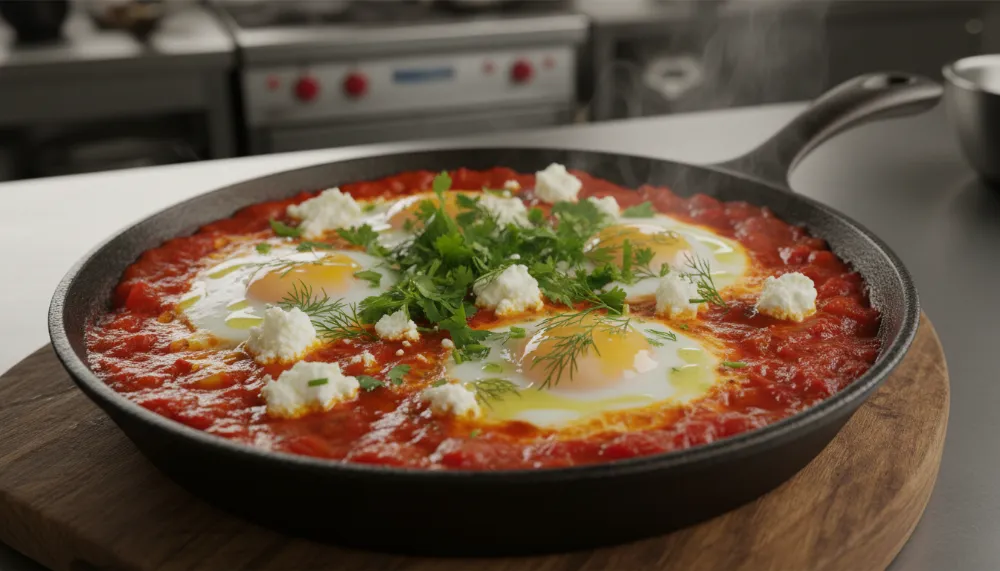
Experience the vibrant, sizzling flavors of North Africa with this Shakshuka with Feta and Fresh Herbs, a one-pan masterpiece that brings together jammy eggs and a spicy tomato base. It is the perfect brunch or dinner solution for those who crave bold, Mediterranean-inspired comfort food.
Shakshuka with Feta and Fresh Herbs
Ingredients
- • 2 tbsp Extra Virgin Olive Oil
- • 1 Medium Onion, finely diced
- • 1 Red Bell Pepper, seeded and chopped
- • 4 Garlic Cloves, minced
- • 2 tbsp Tomato Paste
- • 1 tsp Cumin, 1 tsp Smoked Paprika, ½ tsp Ground Coriander
- • 1/4 tsp Cayenne Pepper (optional for heat)
- • 1 can (28 oz) Whole Peeled Tomatoes, crushed by hand
- • 6 Large Eggs
- • 4 oz Feta Cheese, crumbled
- • ½ cup Fresh Herbs (Parsley, Cilantro, Mint), chopped
- • Salt and Black Pepper to taste
Instructions
- Heat olive oil in a large cast-iron skillet over medium heat. Sauté onions and bell peppers for 8-10 minutes until softened.
- Add garlic, tomato paste, and all dry spices. Stir constantly for 2 minutes to toast the spices and caramelize the paste.
- Pour in the crushed tomatoes and their juices. Reduce heat to low and simmer for 15 minutes until the sauce thickens significantly.
- Use the back of a spoon to create six small wells in the sauce. Gently crack one egg into each well.
- Cover the skillet with a lid and cook for 5-8 minutes, or until the egg whites are set but the yolks remain runny.
- Remove from heat. Immediately top with crumbled feta and the abundance of fresh herbs. Serve hot with crusty bread.
The Rich History of Shakshuka
Shakshuka with Feta and Fresh Herbs is not merely a dish, it is a historical narrative contained within a single pan. To understand its allure, we must look toward the Maghreb region of North Africa, specifically to the culinary landscapes of Tunisia and Libya. The word “Shakshuka” itself is rooted in Maghrebi Arabic, roughly translating to “a mixture” or “all jumbled up,” which perfectly describes the harmonious chaos of vegetables and eggs simmering together. While similar vegetable stews existed during the Ottoman Empire under the name “saksuka,” those early versions were primarily eggplant-based. It was only after the 16th-century introduction of tomatoes and peppers from the New World that the modern iteration of Shakshuka began to take shape.
By the mid-20th century, North African immigrants migrating to the Eastern Mediterranean brought this comforting recipe with them. It quickly transitioned from a humble home-cooked meal to a national breakfast staple in various regions. Today, Shakshuka with Feta and Fresh Herbs is celebrated globally, from high-end brunch spots in New York to street-side stalls in Tel Aviv. Its beauty lies in its simplicity and its ability to adapt to local ingredients while maintaining its core identity as a spicy, tomato-heavy poaching liquid for eggs.
Nutritional Benefits of This One-Pan Wonder
When you prepare a pan of Shakshuka with Feta and Fresh Herbs, you are serving a nutritional powerhouse. A standard serving, including two eggs and an ounce of feta, typically ranges between 250 and 380 calories, making it a satiating yet manageable meal for any time of day. The high protein content, coming from the eggs and cheese, provides long-lasting energy and aids in muscle recovery. However, the true nutritional magic lies in the sauce.
Tomatoes are the primary source of lycopene, a potent antioxidant that becomes more bioavailable when cooked. The addition of bell peppers provides a significant boost of Vitamin C and Vitamin A, essential for immune function and skin health. Furthermore, the egg yolks provide choline, a nutrient vital for brain health and cognitive function. Because this recipe relies on healthy fats like extra virgin olive oil and the natural fats in feta, it facilitates the absorption of fat-soluble vitamins found in the vegetables. By choosing to incorporate fresh herbs like parsley and cilantro, you also add a layer of micronutrients and chlorophyll that aid in digestion.
Professional Tools for the Perfect Shakshuka
Achieving the perfect texture in your Shakshuka with Feta and Fresh Herbs requires the right equipment. For a truly smooth and integrated sauce, professional chefs often rely on high-powered tools. The Ninja BN751 Professional Plus DUO Blender (https://amzn.to/3LCDyNR) is an exceptional choice, especially if you prefer to make your own harissa paste or a silky tahini drizzle to top your dish. Its 1000W motor ensures that even fibrous peppers are blended into a consistent base.
For the preparation of the vegetables, speed and precision are key. The Cuisinart 8 Cup Food Processor (https://amzn.to/47Nhbg8) is a meal-prep essential that allows you to slice onions and peppers in seconds, ensuring that they cook evenly in the pan. If you are looking to add a twist to your Shakshuka, such as roasted chickpeas for extra crunch, the Cosori 9-in-1 TurboBlaze Air Fryer 6 Qt (https://amzn.to/4hRWmVq) is perfect for achieving that roasted texture without the need for a large oven, making it ideal for busy families.
Flavor Variations: Beyond the Basics
While the classic tomato and pepper base is legendary, professional chefs often experiment with variations of Shakshuka with Feta and Fresh Herbs to suit different palates and meal times.
1. The Hearty Beef Style
For those who want a more substantial dinner, adding protein is a common practice. In this variation, you can sauté beef sausage or small, spiced beef meatballs seasoned with cumin and coriander before starting the vegetable base. The rendered fat from the beef adds a deep, savory richness to the tomatoes. If the pan needs deglazing, avoid alcohol and instead use a splash of high-quality beef broth or red wine vinegar to provide the necessary acidity to cut through the fat.
2. The Green Herbal Shakshuka
If you prefer a lighter, more verdant profile, the Green Shakshuka replaces tomatoes with a base of sautéed leeks, spinach, and kale. This version relies heavily on a mixture of fresh herbs like dill and tarragon. The eggs are poached directly in the greens, and the final dish is often finished with a dollop of Greek yogurt or a drizzle of tahini sauce. This is an excellent way to use the Ninja BN751 Professional Plus DUO Blender to create a vibrant green herb oil as a garnish.
3. The Mediterranean Gourmet Variation
This version elevates the dish with briny accents. Incorporating diced preserved lemons and Kalamata olives into the sauce creates a complex, salty profile that pairs beautifully with the creamy feta. To add texture, fold in a handful of chickpeas that have been lightly toasted in the Cosori 9-in-1 TurboBlaze Air Fryer. Finish the dish with a dusting of Sumac or Za’atar to provide an earthy, citrusy finish that complements the fresh mint and cilantro.
Pro-Tips for Success
The most common mistake when making Shakshuka with Feta and Fresh Herbs is overcooking the eggs. The goal is to have fully set, opaque whites while the yolks remain liquid gold, ready to be soaked up by a piece of crusty sourdough. To achieve this, always cover the pan with a lid during the final stage. The trapped steam cooks the top of the egg whites simultaneously with the bottoms, ensuring even heat distribution.
Another tip is the “well” method. Do not simply crack the eggs on top of the sauce, as they will spread and cover the entire surface. Use a large spoon to create a deep indentation in the sauce for each egg. This keeps the eggs contained and allows the sauce to surround them, poaching them gently rather than frying them.
Storage and Meal Prep
Shakshuka with Feta and Fresh Herbs is an excellent candidate for meal prep, provided you store the components correctly. The tomato sauce base can be made in large batches and kept in the refrigerator for up to four days. For the best results, use the Rubbermaid Brilliance Glass Storage Set (https://amzn.to/4oD0YkY), which is leak-proof and stackable, making it easy to organize your fridge. When you are ready to eat, simply reheat the sauce in a skillet and crack fresh eggs into it.
For long-term storage of the sauce or fresh vegetables, the FoodSaver Vacuum Sealer Machine (https://amzn.to/4qWgVnS) is indispensable. It prevents freezer burn and keeps the vibrant flavors of the peppers and garlic intact for months. Note that eggs do not freeze well when poached in the sauce, so it is always best to add them fresh at the time of reheating.