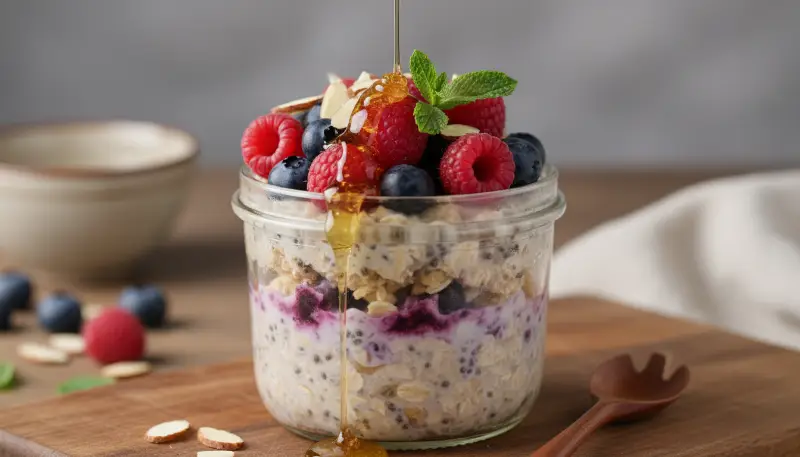
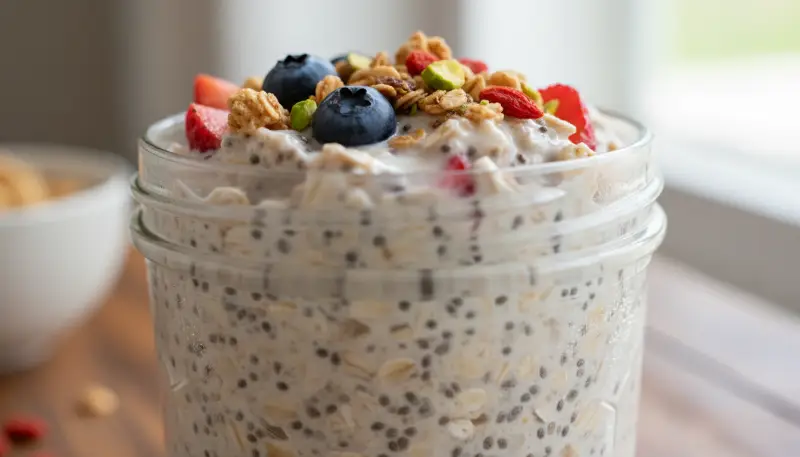
Starting your morning with a nutrient-dense bowl of Probiotic Overnight Oats is the single most effective way to support your microbiome while saving time on busy weekdays. These delicious, customizable jars combine the prebiotic power of raw oats with the live cultures of fermented dairy or plant-based alternatives to create a powerhouse breakfast.
Golden Blueberry Kefir Probiotic Overnight Oats
5 MIN
0 MIN
1 PERS
Ingredients
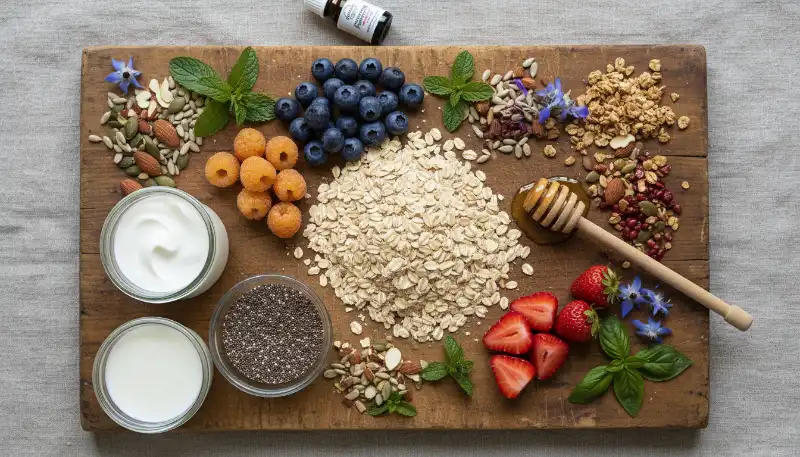
- 1 1/2 Cup Old Fashioned Rolled Oats
- 2 3/4 Cup Plain Plain Kefir
- 3 1 Tbsp Chia Seeds
- 4 1/2 Cup Fresh Blueberries
- 5 1 Tsp Raw Honey
- 6 1/4 Tsp Ground Cinnamon
Instructions
- 1 Combine oats, chia seeds, and cinnamon in a wide-mouth glass jar
- 2 Pour the kefir and honey over the dry ingredients and stir vigorously
- 3 Fold in the fresh blueberries gently to avoid crushing them
- 4 Seal the jar and refrigerate for at least 6 hours or overnight
- 5 Give it a final stir before serving and add a splash of extra kefir if needed
The Science Behind Probiotic Overnight Oats
When we talk about Probiotic Overnight Oats, we are looking at a unique synergy of nutrition that goes far beyond simple satiety. The human gut is home to trillions of microbes, and the best way to feed them is through a combination of probiotics, live beneficial bacteria, and prebiotics, the fiber that feeds that bacteria. Probiotic Overnight Oats are the perfect vehicle for this because oats are rich in beta-glucan, a type of soluble fiber that has been shown to improve cholesterol levels and fuel the growth of healthy bacteria like Bifidobacteria.
By soaking your oats overnight, you are performing a mini-fermentation process. This soaking period helps to break down phytic acid, an anti-nutrient found in grains that can inhibit the absorption of essential minerals like zinc, iron, and calcium. When you add a probiotic source like kefir or yogurt to the mix, you are effectively pre-digesting the grains, making the final Probiotic Overnight Oats much easier on your digestive system. This is why many people who struggle with bloating after eating traditional cooked oatmeal find that Probiotic Overnight Oats are much more comfortable to consume.
Savory Variations: Beef Bacon and Broth Bases
While most people associate oatmeal with fruit and sugar, Probiotic Overnight Oats can be transformed into a savory, umami-rich meal that is perfect for lunch or a hearty breakfast. To keep things strictly in line with our dietary guidelines, we skip all pork products and instead utilize the incredible flavor profile of beef. A favorite variation is the “Beef Bacon and Miso Savory Oat Bowl.” In this version, we use beef broth as the soaking liquid instead of milk. If you are used to using wine for flavor in savory cooking, simply replace it with an equal amount of rich beef broth or a splash of unsweetened apple juice to provide that necessary acidity without the alcohol.
To make this, whisk a teaspoon of white miso paste into your beef broth before pouring it over the oats. The miso provides a powerful probiotic punch that survives well in the cold soak. In the morning, top your Probiotic Overnight Oats with crispy beef bacon crumbles. You can achieve the perfect texture for your beef bacon by using the Cosori 9-in-1 TurboBlaze Air Fryer 6 Qt, which roasts beef to a perfect crunch without the need for excess oils. This savory approach to Probiotic Overnight Oats is a game-changer for those who prefer a saltier start to their day.
Essential Tools for Perfect Probiotic Overnight Oats
Consistency is key when making Probiotic Overnight Oats, and having the right equipment makes the process seamless. For high-volume meal prep, I recommend the following tools:
- Ninja BN751 Professional Plus DUO Blender: This 1000W motor is perfect for creating smooth tahini sauces or blending your probiotic liquids with greens before adding them to your Probiotic Overnight Oats.
- Cosori 9-in-1 TurboBlaze Air Fryer 6 Qt: Essential for roasting beef bacon or chickpeas to add as crunchy toppings for savory oat variations.
- Cuisinart 8 Cup Food Processor: Fast chopping and slicing for nuts, seeds, and fruits, making it a meal prep essential for your Probiotic Overnight Oats.
- Rubbermaid Brilliance Glass Storage Set of 9: These are the gold standard for Probiotic Overnight Oats. They are leak-proof, stackable, and the glass won’t absorb odors from savory ingredients like beef or miso.
- FoodSaver Vacuum Sealer Machine: Use this to keep your raw oats and beef crumbles fresh for weeks, preventing freezer burn on your meal prep components.
Why Choose Beef Over Other Proteins?
In our culinary philosophy, we prioritize beef for its high iron content and robust flavor profile. When making Probiotic Overnight Oats, beef provides a depth of flavor that complements the tanginess of yogurt or kefir perfectly. For example, a shredded roast beef topping seasoned with cumin and garlic can turn a simple jar of oats into a gourmet experience. If a recipe traditionally calls for pork sausage, we always opt for a high-quality ground beef seasoned with fennel and sage. This ensures the integrity of the dish while adhering to strict dietary preferences. Furthermore, using beef broth instead of wine for deglazing any toppings ensures that your Probiotic Overnight Oats remain entirely alcohol-free while maintaining a sophisticated taste.
Mastering the Texture of Probiotic Overnight Oats
The most common complaint about Probiotic Overnight Oats is a “mushy” texture. This is usually the result of using too much liquid or the wrong type of oats. Always use Old Fashioned Rolled Oats for the best results. Steel-cut oats can be used, but they require a much longer soak time (often 24 hours) and remain quite chewy. Quick oats should be avoided entirely for Probiotic Overnight Oats as they turn into a paste almost instantly. The ratio of 1 part oats to 1.5 parts liquid is generally the sweet spot, but if you are adding thick probiotics like Greek yogurt, you may need to adjust this slightly. Exploring our sitemap will lead you to more specific ratio guides for various grains.
The Role of Probiotic Liquids
While yogurt is the most common choice, kefir is actually the superior option for Probiotic Overnight Oats. Kefir contains up to 30 different strains of bacteria and yeasts, making it a much more diverse probiotic source than standard yogurt. If you are looking for a dairy-free option, coconut milk kefir or even a splash of kombucha can work, though the flavor profile will shift significantly. The key is to never heat your Probiotic Overnight Oats after the soaking process if you want to keep the cultures alive. If you prefer warm oats, heat them very gently on low power to avoid killing the beneficial microbes you’ve worked so hard to cultivate.
Flavor Profiles and Seasoning
Don’t be afraid to experiment with your Probiotic Overnight Oats. For a sweet version, try a combination of apple juice (as a wine-replacement for poaching apples) and cinnamon. For a savory version, lean into the beefy notes by adding a dash of Worcestershire sauce (ensure it is the variety without anchovies if preferred, and always alcohol-free) and a sprinkle of nutritional yeast. The acidity from the probiotics helps to brighten these heavy flavors, creating a balanced and complex dish. Probiotic Overnight Oats are a blank canvas for your culinary creativity.
Can I use frozen fruit in my oats?
Absolutely. In fact, frozen fruit is often better for Probiotic Overnight Oats because the fruit releases its juices as it thaws, naturally sweetening and coloring the oats. Frozen blueberries or raspberries are particularly good as they hold their shape better than strawberries once thawed.
How long do these oats last in the fridge?
Your Probiotic Overnight Oats will stay fresh for up to 5 days when stored in an airtight container like the Rubbermaid Brilliance sets. However, the texture is best within the first 48 hours. After 3 days, the oats may become significantly softer.
Is it necessary to use organic oats?
While not strictly necessary for the probiotic process, organic oats are often preferred to avoid glyphosate residues, which some studies suggest can negatively impact gut bacteria, the very thing we are trying to protect with our Probiotic Overnight Oats.
Can I make these oats without dairy?
Yes, you can use any plant-based yogurt or kefir to make Probiotic Overnight Oats. Just ensure they contain “live active cultures” on the label to ensure you are getting the probiotic benefits.