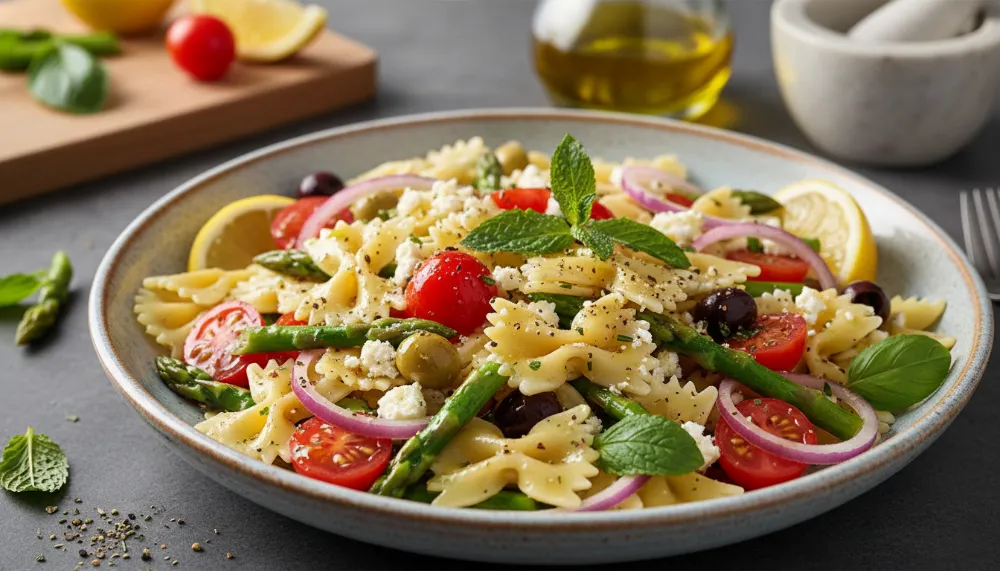
Experience the ultimate fusion of seasonal freshness and classic coastal flavors with this vibrant mediterranean spring pasta salad. This nutrient-dense meal provides a refreshing burst of energy, making it the perfect choice for garden gatherings or sophisticated meal prep.
Mediterranean Spring Pasta Salad
Ingredients
- 1 lb Fusilli or Rotini Pasta
- 1 lb Fresh Asparagus, trimmed and cut into 2-inch pieces
- 1 cup Cherry Tomatoes, halved
- 1 Persian Cucumber, sliced
- 1/2 cup Feta Cheese, crumbled
- 1/2 cup Cooked Beef Salami or Grilled Chicken strips
- 1/4 cup Fresh Parsley, chopped
- Dressing: 1/2 cup Extra Virgin Olive Oil, 1/4 cup Lemon Juice, 2 Garlic Cloves (minced), 1 tsp Dried Oregano
Instructions
- Boil a large pot of salted water and cook pasta according to package directions until al dente. Add asparagus during the last 3 minutes of boiling.
- Drain pasta and asparagus, then rinse under cold water to stop the cooking process.
- In a small bowl or blender, combine olive oil, lemon juice, garlic, and oregano. Whisk until emulsified.
- In a large mixing bowl, combine the pasta, asparagus, tomatoes, cucumber, and beef or chicken.
- Pour the dressing over the salad and toss gently. Top with crumbled feta and fresh parsley before serving.
The Historical Journey of the Mediterranean Spring Pasta Salad
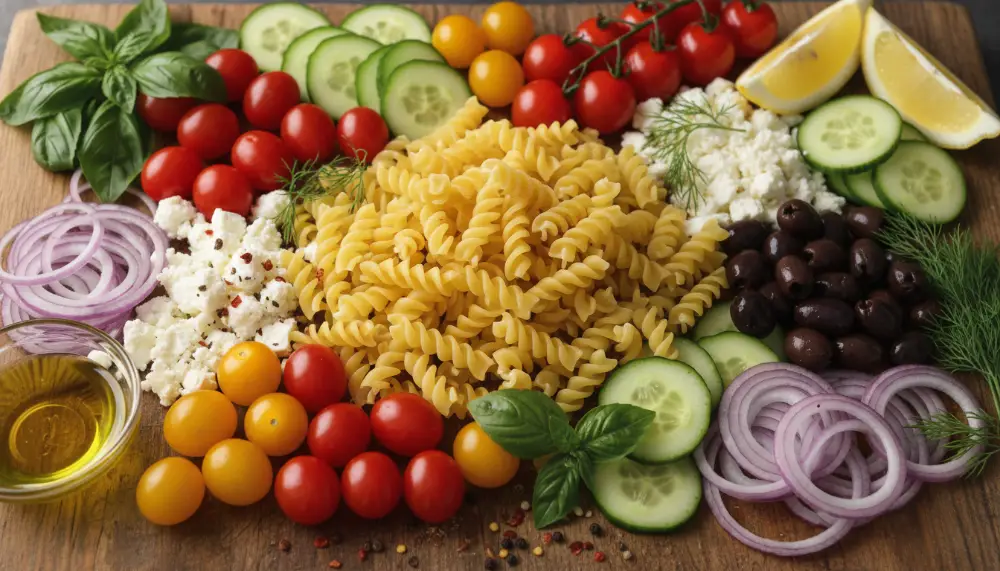
The mediterranean spring pasta salad is not merely a modern convenience food, it is a culinary evolution rooted in centuries of tradition. To understand its origins, we must look at the concept of pasta fredda, or cold pasta, which emerged from the necessity of the Mediterranean climate. Historically, the practice of serving pasta chilled or at room temperature can be traced back to Italian Jewish communities in Venice and Rome. Due to religious laws that prohibited cooking on the day of rest, meals were meticulously prepared in advance. These early versions utilized olive oil, garlic, and seasonal herbs to preserve the noodles, creating a dish that was both flavorful and durable. This technique eventually permeated Sicilian culture, where the scorching heat made hot pasta less appealing during the spring and summer months. Sicilian pasta fredda focused on the bounty of the land, incorporating capers, olives, and fresh tomatoes directly from the vine.
As these traditions traveled across the Atlantic, the mediterranean spring pasta salad underwent an American transformation during the late 20th century. In the 1980s, it transitioned from a simple side dish to a centerpiece of health-conscious dining. The focus shifted toward using textured noodles like fusilli or rotini, which are specifically designed to trap vinaigrettes in their spirals. Today, the dish represents a modern fusion of traditional preservation techniques and the fresh, seasonal produce of the vernal equinox. By honoring these historical roots while adapting to modern dietary needs, such as excluding pork and alcohol, we maintain the integrity of the Mediterranean lifestyle while ensuring the dish is inclusive for all diners.
Nutritional Excellence and the Mediterranean Lifestyle
A well-crafted mediterranean spring pasta salad is a powerhouse of nutrition, adhering closely to the principles of heart-healthy eating. The foundation of the dish, complex carbohydrates, comes from the pasta itself. When using whole-wheat or legume-based varieties, you gain a significant source of dietary fiber, typically around 5 to 7 grams per serving, which aids in digestion and provides sustained energy. The primary fat source, extra-virgin olive oil, is celebrated for its monounsaturated oleic acid and high polyphenol content, both of which are critical for cardiovascular health. Unlike heavy cream-based salads, this version focuses on fats that actually support arterial function.
The spring elements of the salad contribute an array of micronutrients. Asparagus and spinach, common additions during the vernal months, provide high levels of Vitamin K, which is essential for bone health, and Folate, which supports cellular repair. When you incorporate lean proteins like grilled chicken or thinly sliced beef, the salad becomes a complete meal, offering 15 to 25 grams of protein per serving. This balance of macronutrients ensures that you feel satiated without the heaviness associated with traditional pasta dishes. To achieve the perfect consistency for your dressings and sauces, the Ninja BN751 Professional Plus DUO Blender is an exceptional tool, its 1000W motor ensures that your lemon and garlic emulsions are perfectly smooth every time.
Mastering the Elements: Fresh Ingredients for Spring
The success of a mediterranean spring pasta salad hinges on the quality and seasonality of its ingredients. Spring is a season of rebirth, and your salad should reflect that with crisp, vibrant vegetables. Asparagus is the star of the show during this window, choose spears that are firm with closed tips. Blanching them briefly in the pasta water preserves their bright green color and snappy texture. Sugar snap peas and radishes are also excellent additions, providing a structural crunch that contrasts beautifully with the soft pasta. For those who enjoy roasted elements, using the Cosori 9-in-1 TurboBlaze Air Fryer 6 Qt allows you to roast chickpeas or sliced carrots to perfection, adding a caramelized depth to your salad without excess oil.
When selecting your protein, it is vital to adhere to dietary requirements by avoiding pork. Instead, look toward lean beef salami or grilled chicken breast. These options provide the savory, salty kick often provided by prosciutto or ham but in a way that respects your dietary boundaries. For the vegetable prep, the Cuisinart 8 Cup Food Processor is a meal prep essential, it can slice cucumbers and radishes in seconds, ensuring uniform pieces that distribute evenly throughout the mediterranean spring pasta salad. Fresh herbs like mint, dill, and parsley should never be an afterthought, they provide the aromatic high notes that define Mediterranean cuisine.
Professional Dressing Techniques Without Alcohol
Many traditional Mediterranean recipes call for red wine vinegar or white wine reductions, however, a mediterranean spring pasta salad can be even more vibrant without them. The key is to use citrus-based acids or high-quality fruit vinegars. Lemon juice is the gold standard here, providing a clean, sharp acidity that highlights the sweetness of spring vegetables. Apple cider vinegar is another excellent alternative, offering a mild tang and several probiotic benefits. To create a robust dressing, whisk your acid of choice with extra-virgin olive oil, minced garlic, and perhaps a touch of honey or Dijon mustard to stabilize the emulsion. If a recipe originally called for a wine-based deglazing, simply substitute with a high-quality chicken or beef broth to maintain the depth of flavor without the alcohol content.
Creative Variations for Every Palate
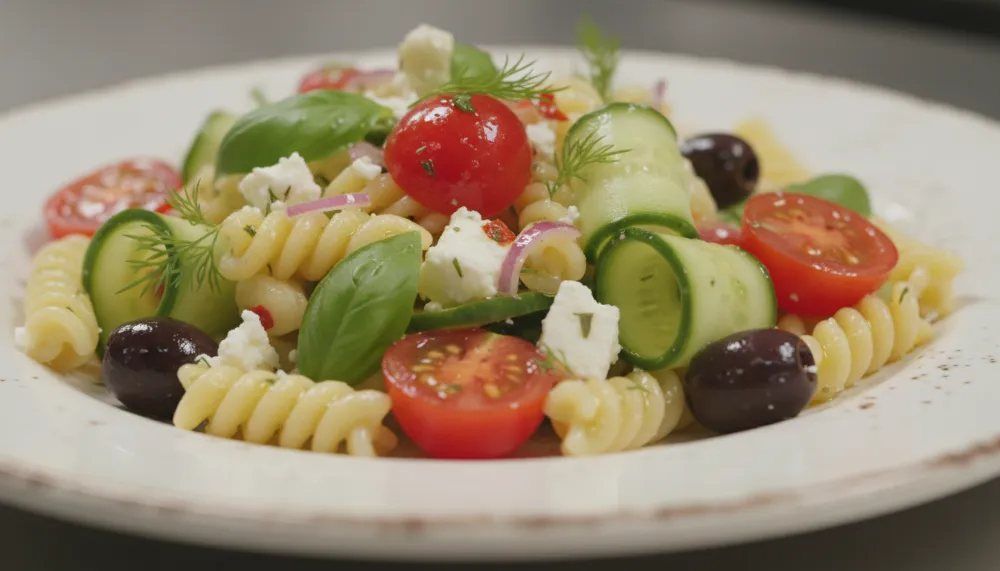
The mediterranean spring pasta salad is an incredibly versatile canvas. For a “Verde” harvest style, focus on green components like orecchiette pasta, blanched asparagus, and a lemon-tahini dressing. This version is light, herbaceous, and incredibly refreshing. If you prefer something more robust, the savory beef and artichoke blend utilizes penne rigate, marinated artichoke hearts, and air-dried beef strips. This version leans into the salty, umami-rich flavors of the Mediterranean. Finally, the chickpea and feta garden variation is a vegetarian-friendly powerhouse. By doubling the portion of chickpeas and feta, you create a creamy, protein-rich salad that stores exceptionally well for office lunches.
Storage and Meal Prep Strategy
One of the greatest advantages of the mediterranean spring pasta salad is its longevity. Unlike leafy green salads that wilt within hours, a pasta-based salad actually improves as it sits, as the noodles absorb the flavors of the dressing. To keep your salad fresh for up to five days, storage is key. The Rubbermaid Brilliance Glass Storage Set of 9 is the perfect solution, these leak-proof, stackable containers prevent the dressing from escaping and keep the vegetables crisp. For long-term ingredient preservation, the FoodSaver Vacuum Sealer Machine is indispensable for keeping your beef or chicken fresh before it is added to the salad, preventing any loss of flavor or texture. Always store the feta cheese separately if you plan on keeping the salad for more than three days to maintain the best texture.
Frequently Asked Questions
Can I make this salad gluten-free? Yes, simply substitute the traditional pasta with a high-quality chickpea or brown rice pasta. How do I prevent the pasta from sticking? Rinse the cooked pasta under cold water immediately after draining to remove excess starch. What is the best way to serve this? While it can be eaten immediately, letting it chill for at least two hours allows the flavors of the mediterranean spring pasta salad to fully develop.