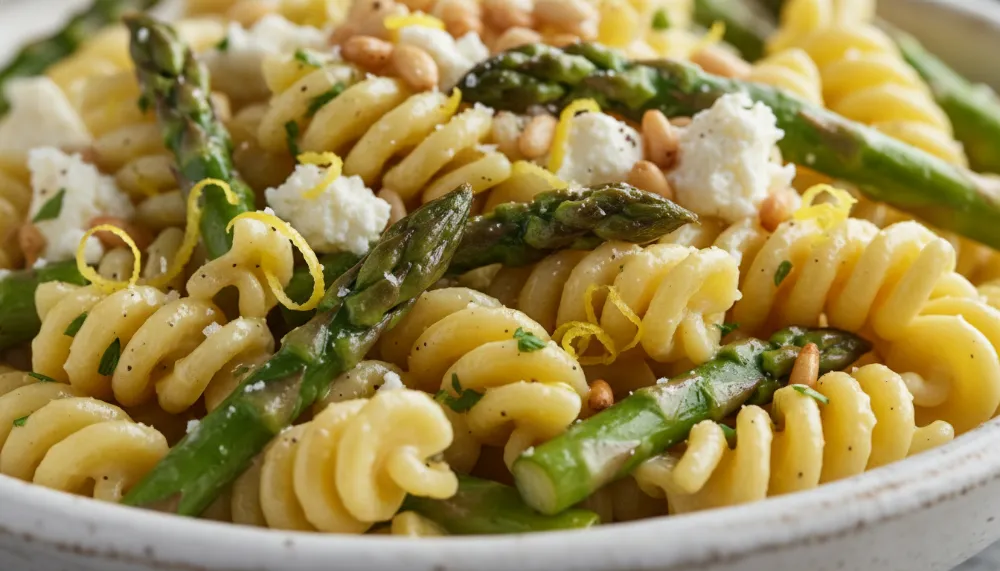
This vibrant lemon asparagus pasta salad combines the zest of fresh citrus with the crunch of seasonal greens for a refreshing, crowd-pleasing dish. It is the perfect balance of light, zesty, and satisfying for any occasion, from garden parties to weekday meal prep.
Lemon Asparagus Pasta Salad
Ingredients
- • 1 lb Rotini or Penne Pasta
- • 1 lb Fresh Asparagus (trimmed and cut into 2-inch pieces)
- • 1/2 cup Extra Virgin Olive Oil
- • 2 Fresh Lemons (zested and juiced)
- • 3 Cloves Garlic (minced)
- • 1/2 cup Shaved Parmesan (Cow’s Milk)
- • 1/4 cup Fresh Parsley (finely chopped)
- • 1 tsp Red Pepper Flakes
- • Sea Salt and Cracked Black Pepper to taste
- • 1/2 cup Toasted Pine Nuts (optional)
Instructions
- 01. Boil a large pot of salted water. Cook pasta according to package directions until al dente.
- 02. During the last 2 minutes of pasta cooking, add the asparagus pieces to the pot to blanch.
- 03. Drain the pasta and asparagus, then immediately rinse with cold water to stop the cooking process.
- 04. In a small bowl, whisk together olive oil, lemon zest, lemon juice, garlic, and red pepper flakes.
- 05. Toss the pasta and asparagus with the dressing, parsley, and parmesan. Season with salt and pepper.
- 06. Chill for 30 minutes before serving for maximum flavor development.
The Historical Origin of Pasta Salad
The lemon asparagus pasta salad is not merely a modern convenience, it is a dish rooted in the deep culinary traditions of the Mediterranean. Historically, the concept of cold pasta, known in Italy as pasta fredda, arose from the necessity of eating light during the scorching summer months. In regions like Sicily and Puglia, where the sun dictates the rhythm of the kitchen, pasta was often tossed with citrus and local vegetables to be consumed at room temperature. This prevented the kitchen from overheating and provided a portable, nutritious meal for those working in the fields.
By the mid-20th century, as refrigeration became a household standard, the concept evolved into the modern pasta salad we recognize today. The 1980s saw a particular boom in creative pasta dishes in the United States, moving away from the heavy, mayonnaise-based macaroni salads of the past and toward vegetable-forward, vinaigrette-dressed masterpieces. The pairing of lemon and asparagus became the gold standard for springtime elegance, symbolizing the transition from heavy winter stews to the bright, fresh bounty of the new season.
The Nutritional Powerhouse: Why Asparagus Wins
When you prepare a lemon asparagus pasta salad, you aren’t just making a delicious side dish, you are crafting a nutritional powerhouse. Asparagus is widely regarded by nutritionists as a “superfood” due to its dense concentration of micronutrients. It is an exceptional source of Vitamin K, which is vital for bone health and proper blood clotting. Furthermore, it provides a significant amount of Folate (Vitamin B9), which supports cell function and tissue growth.
The addition of lemon is more than just a flavor choice. The high Vitamin C content in fresh lemon juice acts as a natural preservative, keeping the asparagus vibrant green, while also aiding in the absorption of plant-based iron from the pasta and greens. To ensure your ingredients are processed with professional precision, using the Cuisinart 8 Cup Food Processor is essential for fast chopping and slicing, making it a true meal prep essential.
Mastering the Art of the Dressing: Emulsion and Balance
A great lemon asparagus pasta salad lives or dies by its dressing. To achieve a professional finish, you must master the emulsion. An emulsion is the process of binding oil and acid (lemon juice) into a singular, creamy liquid that won’t separate. While a simple whisk can work, professional chefs often use high-powered tools to create a silky glaze that clings to every crevice of the pasta.
The Ninja BN751 Professional Plus DUO Blender is perfect for this task. With its 1000W motor, it can emulsify lemon juice, garlic, and extra virgin olive oil in seconds, resulting in a dressing that is far more stable than anything mixed by hand. This tool is also perfect for creating tahini sauces or harissa pastes should you choose to go with a more adventurous flavor profile. When making the dressing, always remember to use the zest of the lemon, as the essential oils in the skin provide a depth of citrus flavor that the juice alone cannot match.
Elevated Variations for the Modern Palate
The Mediterranean Umami Profile
For those who desire a deeper flavor profile, consider the Mediterranean Umami variation. This version incorporates sun-dried tomatoes, kalamata olives, and marinated artichoke hearts. To replace the depth typically offered by white wine, professional chefs utilize a high-quality chicken broth or a splash of apple cider vinegar. This adds a savory complexity that balances the brightness of the lemon. For an added crunch, consider roasting some chickpeas in the Cosori 9-in-1 TurboBlaze Air Fryer 6 Qt, which roasts vegetables perfectly with its large family capacity.
The Creamy No-Mayo Glaze
If you prefer a creamier texture without the heaviness of mayonnaise, try incorporating whole-milk ricotta or a high-quality sheep’s milk cheese. The secret to this variation is to reserve a small amount of the starchy pasta water. Whisking the warm pasta water into your ricotta and lemon juice mixture creates a luxurious, professional-grade glaze that coats the pasta perfectly without feeling greasy.
Storage and Longevity: Meal Prep Like a Pro
One of the greatest advantages of the lemon asparagus pasta salad is its longevity. Unlike leafy green salads that wilt within minutes of being dressed, pasta salad actually improves as it sits, allowing the flavors to penetrate the pasta. However, proper storage is critical to maintaining food safety and texture.
For meal prep enthusiasts, the Rubbermaid Brilliance Glass Storage Set of 9 is the perfect solution. These leak-proof, stackable glass containers prevent the lemon acid from reacting with plastic, ensuring your salad stays fresh and crisp for up to four days. If you are preparing large batches of ingredients in advance, such as blanched asparagus or cooked chicken, using a FoodSaver Vacuum Sealer Machine can keep your components fresh for significantly longer, preventing the freezer burn or oxidation that can ruin a dish’s flavor profile.
Pro-Tips for the Perfect Texture
To ensure your lemon asparagus pasta salad reaches the pinnacle of culinary excellence, follow these professional tips:
- The Salt Ratio: Always salt your pasta water until it tastes like the sea. This is your only chance to season the pasta itself from the inside out.
- Blanching and Shocking: When cooking the asparagus, only boil it for 2 minutes. Immediately plunging it into an ice bath (or very cold running water) stops the cooking process, locking in that vibrant green color and satisfying snap.
- The Pasta Shape: Choose shapes with ridges, such as rotini, fusilli, or radiatori. These shapes are designed to “catch” the dressing and small aromatics like lemon zest and minced garlic.
- Room Temperature Serving: While it stores well in the fridge, the best flavors are unlocked when the salad is served at room temperature. This allows the high-quality olive oil to liquefy and the aromatics to become more fragrant.