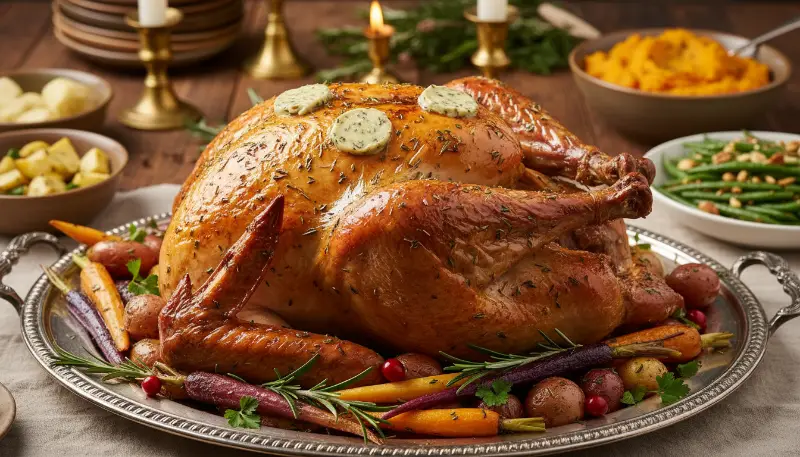
Transform your holiday centerpiece or special dinner with our Herb Butter Roast Turkey recipe. This guide reveals the secrets to a perfectly juicy, tender turkey with irresistible crispy, golden-brown skin, all infused with aromatic fresh herbs and garlic. Say goodbye to dry turkey and hello to a show-stopping dish that will impress everyone at your table.
Roasting a turkey can be the highlight of any festive meal, and infusing it with aromatic herb butter ensures a juicy, tender, and incredibly flavorful centerpiece. This recipe focuses on creating a golden, crispy skin and moist meat by generously applying a compound butter blend under and over the turkey’s skin, along with a strategic roasting method. Get ready to enjoy the most incredible Herb Butter Roast Turkey you’ve ever tasted!
Ingredients
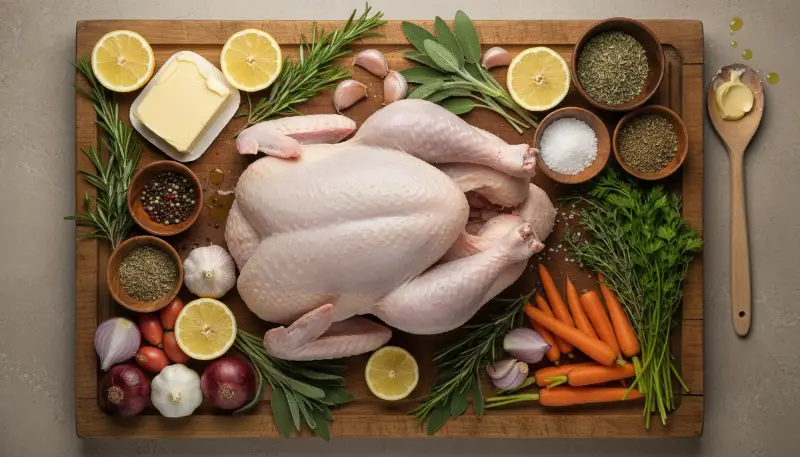
For the Turkey:
- 1 whole turkey (12-16 pounds), fresh or thawed
- 2 sticks (1 cup) unsalted butter, softened to room temperature
- 2 tablespoons finely minced fresh rosemary, plus 3-5 sprigs
- 2 tablespoons finely minced fresh thyme, plus 3-5 sprigs
- 2 tablespoons finely minced fresh sage, plus 3-5 sprigs
- 1-2 tablespoons finely minced fresh parsley (optional)
- 6 cloves garlic, minced (or 2 teaspoons garlic powder)
- Zest of 1 lemon
- 2 teaspoons salt, plus more for seasoning
- 1 teaspoon black pepper, plus more for seasoning
- 1 large yellow onion, quartered
- 3 large carrots, cut into 1-inch pieces
- 3 stalks celery, cut into 1-inch pieces
- 2 cups low-sodium chicken or turkey broth, plus more for gravy if needed
- 1 lemon, halved (for cavity, optional)
For the Gravy (Optional):
- Pan drippings from the roasted turkey
- 1/4 cup all-purpose flour
- 2 cups low-sodium chicken or turkey broth
- Salt and pepper to taste
Instructions
-
Prepare the Herb Butter: In a small bowl, combine the softened butter, minced rosemary, thyme, sage, parsley (if using), minced garlic, lemon zest, 2 teaspoons salt, and 1 teaspoon black pepper. For effortless mincing of herbs and garlic, we highly recommend the Cuisinart 8 Cup Food Processor – it’s a meal prep essential for fast chopping and slicing. Mix until well combined. Reserve 2 tablespoons of this herb butter in a separate small bowl at room temperature for the gravy, if making. Any extra herb butter can be stored for future use in Rubbermaid Brilliance Glass Storage containers, perfect for leak-proof and stackable meal prep.
-
Prepare the Turkey: Remove the turkey from its packaging, remove the giblets and neck from the cavity, and pat the turkey thoroughly dry inside and out with paper towels. This step is crucial for crispy skin. If time allows, you can air dry the turkey in the refrigerator for a day or two. Do not rinse the turkey as it can spread bacteria.
-
Apply the Herb Butter: Gently slide your fingers between the skin and the breast meat to loosen the skin without tearing it. Take about half of the remaining herb butter and rub it directly onto the breast meat under the skin, distributing it evenly. Rub the remaining herb butter all over the outside of the turkey, including the legs and wings. Season the entire turkey generously with additional salt and pepper.
-
Stuff the Cavity and Roasting Pan: Stuff the main cavity of the turkey with the quartered onion, carrot pieces, celery pieces, lemon halves, and the reserved herb sprigs (rosemary, thyme, sage). Tie the turkey legs together loosely with kitchen twine to help it cook evenly and hold its shape. Arrange the remaining carrots, celery, and onion pieces on the bottom of a large roasting pan. This creates a natural rack, promoting airflow and preventing the turkey from sitting in its juices. Pour 1-2 cups of chicken or turkey broth into the bottom of the roasting pan.
-
Roast the Turkey: Preheat your oven to 425°F (220°C). Place the turkey, breast-side up, on top of the vegetables in the roasting pan. Roast for 30-45 minutes at 425°F (220°C) until the skin begins to turn golden brown. Reduce the oven temperature to 350°F (175°C) and continue roasting. Baste the turkey every 30-45 minutes with the pan juices. If the pan drippings run low, add more warm broth to the pan. If the skin begins to get too dark, loosely tent the turkey with aluminum foil.
-
Check for Doneness and Rest: Continue roasting until an instant-read thermometer inserted into the thickest part of the thigh (without touching the bone) registers 165°F (74°C). The total roasting time for a 12-16 pound turkey is typically 3 to 4 hours, or about 13 minutes per pound, but always rely on the internal temperature. Once done, carefully remove the turkey from the oven and transfer it to a large cutting board or platter. Tent it loosely with foil and let it rest for at least 20-30 minutes before carving. This allows the juices to redistribute, resulting in a more tender and moist turkey.
-
Make the Gravy (Optional): While the turkey is resting, prepare the gravy. Strain the pan juices from the roasting pan into a medium saucepan, pressing on the solids to extract all liquid. Allow the fat to separate from the juices, then skim off most of the fat, leaving about 1/4 cup with the juices. Melt the reserved 2 tablespoons of herb butter in a separate heavy saucepan over medium heat. Whisk in the 1/4 cup all-purpose flour and cook, whisking constantly, for 1-2 minutes to create a roux. Gradually whisk in the pan juices and 2 cups of chicken or turkey broth. Bring the mixture to a simmer, whisking constantly, and cook until the gravy thickens to your desired consistency, about 5-10 minutes. Season with salt and pepper to taste.
After enjoying your delicious Herb Butter Roast Turkey, you might have leftovers! Keep them fresh longer and prevent freezer burn with the FoodSaver Vacuum Sealer Machine, an excellent tool for preserving all your culinary creations.
Top 10 FAQs for Herb Butter Roast Turkey
1. How do I prevent the turkey breast from drying out?
Applying herb butter under the skin directly onto the breast meat, basting regularly, and not overcooking are key to a moist breast. Tent with foil if the breast starts browning too quickly.
2. Should I brine my turkey before roasting?
While brining can add moisture and flavor, this herb butter recipe is designed to keep the turkey juicy without it. If you choose to brine, use unsalted butter in your herb mix to control sodium levels.
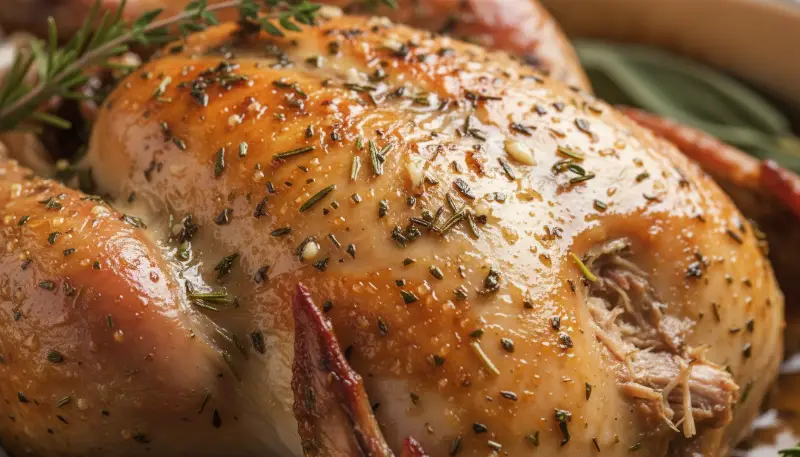
3. What’s the best way to get crispy skin?
Patting the turkey very dry before applying butter, starting with a high oven temperature, and avoiding excessive basting in the final hour of cooking will help achieve crispy skin.
4. How long does it take to thaw a frozen turkey?
Thaw a frozen turkey in the refrigerator, allowing approximately 24 hours for every 4-5 pounds of turkey. A 12-16 pound turkey will need 3-4 days to thaw completely.
5. What internal temperature indicates the turkey is fully cooked?
The turkey is safely cooked when an instant-read thermometer inserted into the thickest part of the thigh (without touching bone) reads 165°F (74°C).
6. Is it necessary to stuff the turkey cavity?
Stuffing the cavity with aromatics like onions, celery, carrots, and herbs adds flavor to the turkey, but it’s not mandatory. If you do stuff it, ensure the stuffing also reaches a safe internal temperature.
7. How important is resting the turkey after roasting?
Resting the turkey for at least 20-30 minutes after roasting is very important. It allows the juices to redistribute throughout the meat, resulting in a more tender and flavorful turkey.
8. Can I prepare the herb butter in advance?
Yes, the herb butter can be made several days in advance and stored in the refrigerator. Bring it back to room temperature before applying to the turkey.
9. What kind of roasting pan should I use?
A large roasting pan with a V-rack or flat rack is ideal to allow for even cooking and good airflow around the turkey. If you don’t have a rack, a bed of chopped vegetables works well.
10. How do I troubleshoot if my turkey is cooking unevenly?
If one part of the turkey is browning too quickly (e.g., the breast), you can tent that area loosely with aluminum foil. Using a meat thermometer in multiple spots helps monitor for even cooking.
Looking for other festive main courses or delicious side dishes to complete your feast? Browse our extensive recipe index for more culinary inspiration!