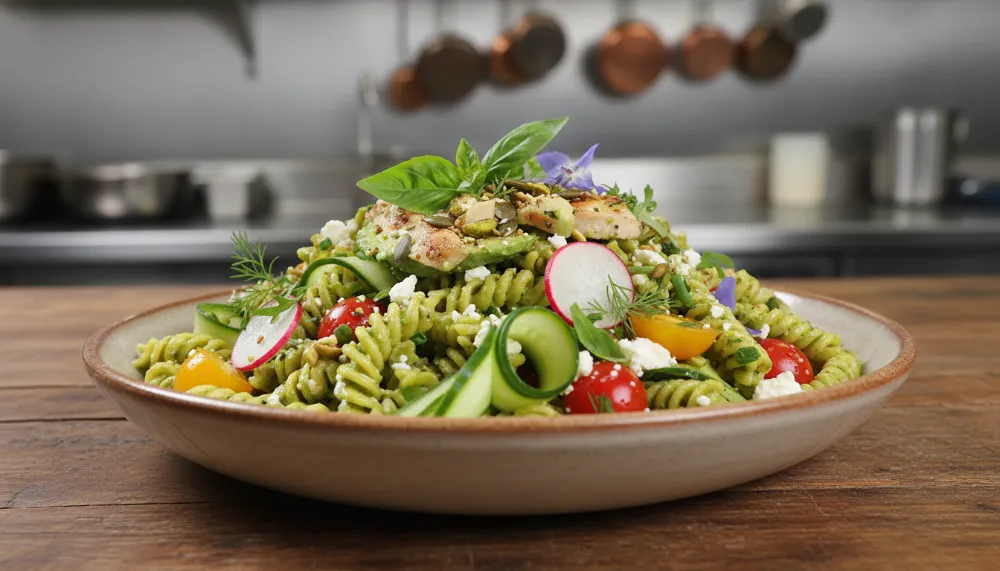
This vibrant green goddess pasta salad combines a legendary 1920s herb dressing with hearty pasta and fresh vegetables for the ultimate crowd-pleasing meal. It is the perfect balance of creamy, zesty, and refreshing flavors that will elevate any gathering or meal prep routine.
Green Goddess Pasta Salad
INGREDIENTS
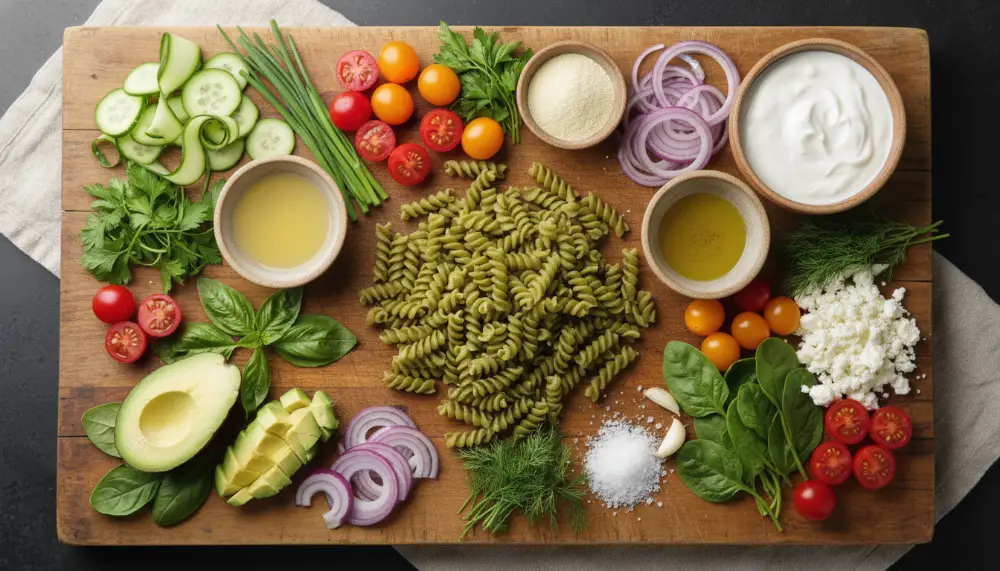
- 16 oz Rotini or Fusilli Pasta
- 2 cups Cooked Chicken Breast or Grilled Beef Strips
- 1 large Avocado, pitted
- 1 cup Greek Yogurt
- 1 cup Fresh Basil Leaves
- 1/2 cup Fresh Parsley
- 1/4 cup Chives, chopped
- 3 cloves Garlic
- 2 tbsp Lemon Juice
- 2 tbsp Apple Cider Vinegar
- 1/2 cup Extra Virgin Olive Oil
- 1 cup Cherry Tomatoes, halved
- 1/2 cup Cucumber, diced
- Salt and Black Pepper to taste
INSTRUCTIONS
- Boil a large pot of salted water and cook pasta according to package directions until al dente. Drain and rinse with cold water.
- In a high-powered blender, combine avocado, yogurt, basil, parsley, chives, garlic, lemon juice, apple cider vinegar, and olive oil.
- Blend until the sauce is completely smooth and vibrant green.
- In a large mixing bowl, combine the cooled pasta, chosen protein (chicken or beef), tomatoes, and cucumbers.
- Pour the green goddess dressing over the mixture and toss until every noodle is perfectly coated.
- Season with salt and pepper. Chill for at least 30 minutes before serving.
The Fascinating History of the Green Goddess Profile
While we think of the green goddess pasta salad as a modern social media sensation, its roots stretch back over a century to the opulent dining rooms of San Francisco. In 1923, at the legendary Palace Hotel, Executive Chef Philip Roemer sought to create a dish that would honor George Arliss, the lead actor in the popular play, The Green Goddess. Arliss was a frequent guest at the hotel, and the chef wanted a dressing that matched the actor’s sophisticated and bold stage presence.
The original dressing was a masterful blend of mayonnaise, anchovies, scallions, parsley, tarragon, and vinegar. It was inspired by a 17th-century French sauce called sauce au vert, which was traditionally paired with seafood. Over the decades, the recipe evolved from a simple salad dressing into a versatile sauce used for dips, spreads, and eventually, the base for our beloved green goddess pasta salad. By the 1970s, as pasta salads became a staple of American potlucks and picnics, the herbaceous creaminess of the Green Goddess became the perfect companion for corkscrew-shaped noodles that could trap every drop of flavor.
Essential Tools for a Perfect Pasta Salad
To achieve the silky, emulsified texture that defines a professional green goddess pasta salad, the quality of your equipment is just as important as your ingredients. A high-performance blender is non-negotiable for breaking down fibrous herbs and garlic into a uniform cream. We highly recommend the Ninja BN751 Professional Plus DUO Blender. Its 1000W motor is perfect for processing thick bases like tahini or yogurt, ensuring your green goddess sauce is never grainy.
If you prefer a more textured approach to your vegetable preparation, the Cuisinart 8 Cup Food Processor is a meal prep essential. It allows for fast chopping and slicing of cucumbers, radishes, and peppers, giving you uniform pieces that look stunning in the bowl. For those looking to add a unique crunch, consider using the Cosori 9-in-1 TurboBlaze Air Fryer 6 Qt to roast chickpeas or beef tips. It roasts vegetables and proteins perfectly, offering a high-capacity solution for family-sized portions of green goddess pasta salad.
Choosing the Right Pasta Shape
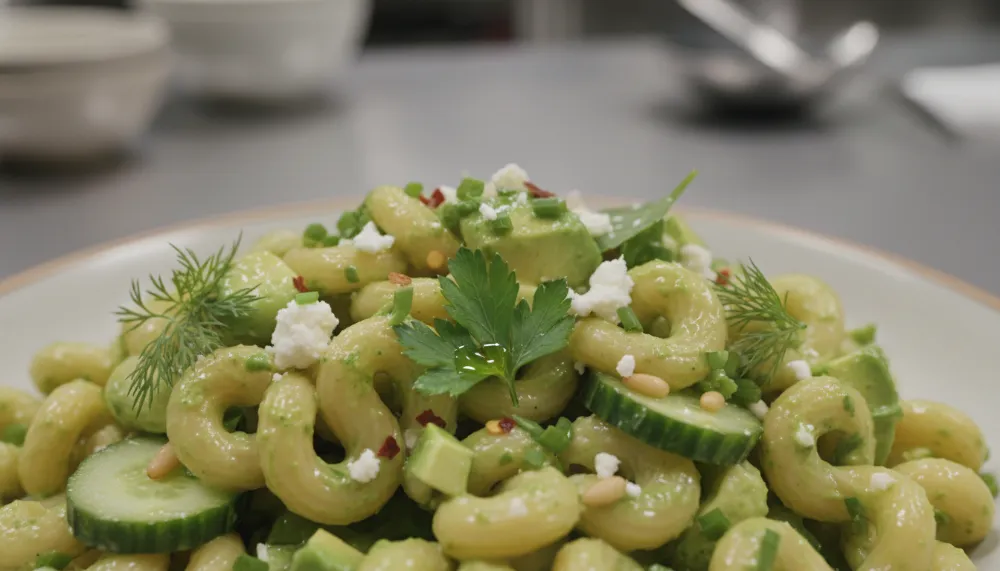
Not all pasta shapes are created equal when it comes to the green goddess pasta salad. You want a shape with plenty of surface area and “nooks and crannies” to hold the thick, herbaceous dressing. Rotini and fusilli are the gold standards, as their spiral structure acts like a screw, pulling the sauce into every bite. Cavatappi, with its double-turn corkscrew shape, is another excellent choice for a more whimsical presentation. Avoid long, thin pastas like spaghetti or linguine, as the weight of the creamy dressing will cause them to clump together and lose their texture.
Gourmet Variations for Every Palate
The beauty of the green goddess pasta salad lies in its adaptability. Depending on your mood or the occasion, you can transform this dish from a light side to a heavy main course. Because we strictly avoid pork and alcohol, these professional variations focus on rich proteins and acid balances that provide maximum impact.
The Savory Beef “Steakhouse” Twist
For a hearty, masculine version of the green goddess pasta salad, use thinly sliced grilled flank steak or seared ribeye strips. Season the beef heavily with cracked black pepper and garlic before searing. To complement the richness of the beef, incorporate roasted cherry tomatoes and pickled red onions. Instead of wine-based vinegars, use apple cider vinegar to pickle the onions, which adds a bright, fruity acidity that cuts through the fat of the steak. This variation is best served at room temperature to keep the beef tender.
The Herb-Roasted Poultry Classic
Chicken is the most popular addition to green goddess pasta salad for a reason. Its neutral profile allows the fresh tarragon and basil to shine. Use shredded rotisserie chicken for convenience or lemon-thyme grilled chicken breast for a more refined flavor. To enhance the “green” aspect, add blanched asparagus tips and frozen peas. The slight snap of the asparagus provides a wonderful textural contrast to the soft pasta. For the best results, fold the dressing into the chicken while the meat is still slightly warm, allowing it to absorb the herbal notes more deeply.
The Plant-Powered Vegetarian Option
If you are looking for a meat-free alternative, crispy roasted chickpeas are the ultimate protein source for a green goddess pasta salad. When air-fried until crunchy, they act like high-protein croutons. You can also use a mixture of toasted walnuts and cannellini beans for a Mediterranean flair. To make the dressing even more robust without dairy, you can replace a portion of the yogurt with a tahini-avocado base and a tablespoon of nutritional yeast for an earthy, umami-rich finish.
Storing and Meal Prepping Success
One of the biggest challenges with any creamy salad is preventing it from becoming soggy or losing its vibrant color. The oxidation of avocado and fresh herbs can turn your bright green sauce into a dull brown if not stored correctly. This is where high-quality storage solutions become vital. The Rubbermaid Brilliance Glass Storage Set of 9 is perfect for meal prep because it is leak-proof and stackable, keeping your dressing separate from the pasta until you are ready to eat if desired.
For long-term ingredient freshness, the FoodSaver Vacuum Sealer Machine is a game changer. You can vacuum seal your pre-cut proteins or even the fresh herbs to prevent freezer burn and keep everything tasting like it was just harvested from the garden. If you have already mixed your green goddess pasta salad, store it in an airtight container with a piece of plastic wrap pressed directly against the surface of the salad to minimize air contact.
Professional Tips for the Best Results
- Salt the Water: Your pasta water should be as salty as the sea. This is the only chance you have to season the pasta itself from the inside out.
- Al Dente is Key: Overcooked pasta will fall apart when tossed with a heavy dressing. Cook it one minute less than the package instructions.
- The Acid Balance: Since we are not using wine, the balance between lemon juice and apple cider vinegar is crucial. If the salad feels “flat,” add a teaspoon of lemon zest to brighten the flavors.
- Herb Freshness: Never use dried herbs for the dressing. The entire profile of the green goddess pasta salad relies on the volatile oils found in fresh basil, parsley, and chives.
- Rinsing the Pasta: Unlike hot pasta dishes where you want the starch to help the sauce stick, for cold salads, you should rinse the pasta in cold water to stop the cooking process and remove excess starch that could make the salad gummy.
Nutritional Benefits of the Green Goddess
A standard serving of this green goddess pasta salad is a nutritional powerhouse. By using Greek yogurt as the base instead of pure mayonnaise, you significantly increase the protein content while adding probiotics for gut health. The avocado provides healthy monounsaturated fats, which are essential for heart health and the absorption of fat-soluble vitamins like Vitamin A and K found in the spinach and parsley. Using whole-wheat or lentil-based pasta can further boost the fiber content, making this a slow-digesting meal that keeps you full for hours. Because we focus on fresh, whole ingredients and avoid processed additives or alcohol, this dish fits perfectly into a clean-eating lifestyle.