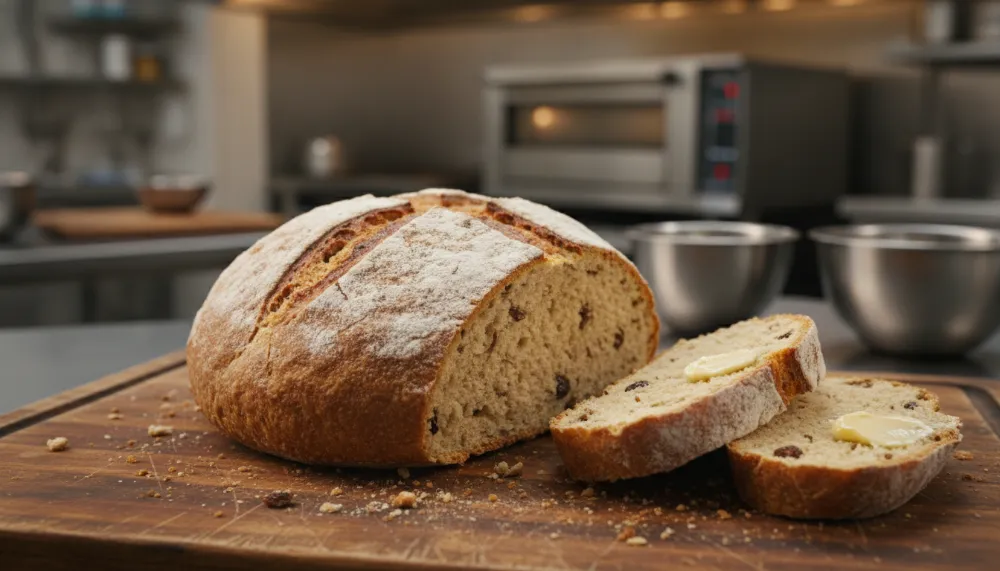
Experience the rustic charm of a perfectly crusty, tender loaf that defies its gluten-free nature with every buttery bite. This Gluten Free Irish Soda Bread brings the heart of Ireland to your kitchen without the wait of yeast or the worry of gluten.
Authentic Gluten Free Irish Soda Bread
Ingredients
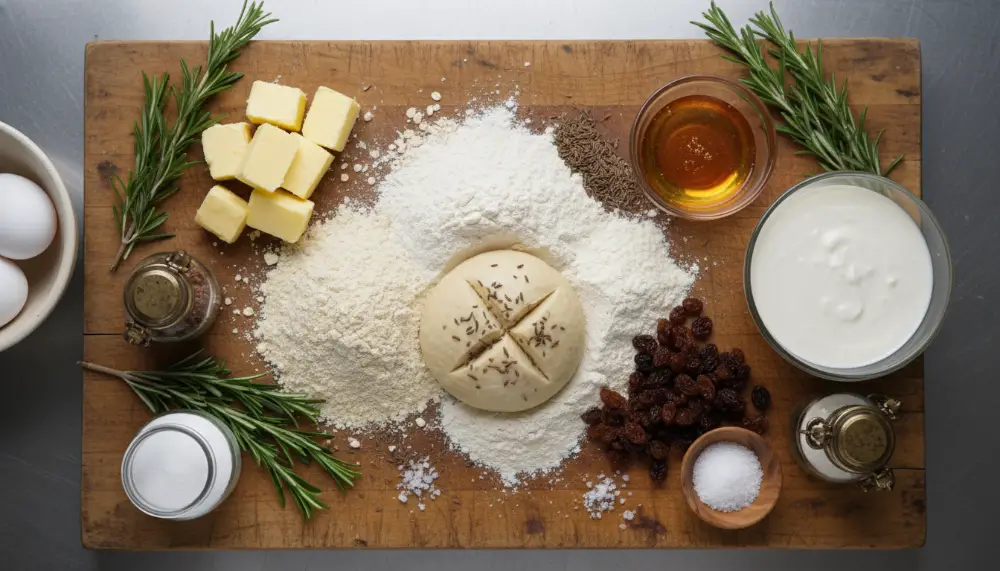
- 1 4 cups High-Quality Gluten Free 1-to-1 Flour Blend (with xanthan gum)
- 2 1 1/2 teaspoons Baking Soda
- 3 1 teaspoon Baking Powder
- 4 1 teaspoon Fine Sea Salt
- 5 4 tablespoons Cold Unsalted Butter (cubed)
- 6 1 3/4 cups Real Buttermilk (room temperature)
- 7 1 Large Egg
- 8 1/2 cup Currants or Raisins (Optional)
Instructions
- 1 Preheat your oven to 400 degrees F and line a baking sheet with parchment paper.
- 2 In a large bowl, whisk together the flour, baking soda, baking powder, and salt.
- 3 Use a pastry cutter or your fingers to work the cold butter into the dry ingredients until it looks like coarse crumbs.
- 4 Whisk the egg into the buttermilk and pour it into the flour mixture, adding currants if using.
- 5 Gently mix until a shaggy dough forms. Do not overwork it.
- 6 Shape the dough into a round loaf on the baking sheet and score a deep ‘X’ into the top.
- 7 Bake for 45 to 55 minutes until the loaf sounds hollow when tapped on the bottom.
The Fascinating History of Irish Soda Bread
The story of Gluten Free Irish Soda Bread is one of resilience and adaptation. While we think of it as an ancient tradition, the version we know today was born out of necessity in the 1830s. When bicarbonate of soda arrived in Ireland, it revolutionized baking for a country where the climate favored ‘soft wheat’. Unlike the ‘hard wheat’ found in other parts of Europe, soft wheat is naturally lower in gluten and doesn’t respond well to yeast. However, when combined with the acidity of buttermilk and the lifting power of baking soda, it produced a reliable, hearty loaf.
During the Great Famine between 1845 and 1852, this bread became a primary source of sustenance. It required no expensive oven, instead, it was baked in a ‘bastable’, a heavy cast-iron pot placed directly over an open hearth. The deep cross sliced into the top, which we still do today, was traditionally believed to ‘let the faeries out’, though its scientific purpose is to allow the thick dough to expand without cracking the crust irregularly. Today, the transition to a gluten free version is a natural evolution, as the original recipe never relied on a strong gluten network for its rise anyway.
The Science of the Rise: Buttermilk and Soda
The magic of Gluten Free Irish Soda Bread lies in a simple chemical reaction. Because we aren’t using yeast, we rely on the interaction between an acid, buttermilk, and a base, baking soda. This reaction creates carbon dioxide bubbles immediately upon mixing. In gluten-free baking, this process is even more critical because we lack the elastic protein structure that usually traps those bubbles. This is why we often add a touch of baking powder to our gluten-free versions, it provides a secondary lift that ensures the loaf doesn’t become a dense brick.
For those who cannot consume dairy, you can replicate the acidity of buttermilk by adding two tablespoons of lemon juice or apple cider vinegar to a dairy-free milk alternative. This mimicry is essential, without the acid, the baking soda remains unactivated, leading to a flat bread with a metallic, soapy aftertaste. When using the Cuisinart 8 Cup Food Processor to pulse your dry ingredients and butter, you ensure that the fats remain cold, creating tiny steam pockets that further assist in the leavening process.
Choosing the Best Gluten-Free Flour for Soda Bread
Not all gluten-free flours are created equal. For a successful Gluten Free Irish Soda Bread, you need a ‘1-to-1’ or ‘measure for measure’ blend that contains xanthan gum. Xanthan gum acts as the ‘glue’ that gluten usually provides, giving the bread enough structure to hold its shape. If your blend doesn’t have it, you will likely end up with a pile of crumbs. I recommend blends that use a mix of rice flour, potato starch, and sorghum flour for the best flavor profile.
If you prefer a more traditional ‘Brown Soda Bread’ style, you can replace one cup of the white gluten-free blend with oat flour (ensure it is certified gluten-free) or buckwheat flour. This adds a deeper, nuttier flavor and a more rugged texture that mimics the wholemeal flour used in Ireland. To keep your ingredients at peak freshness, I suggest using the FoodSaver Vacuum Sealer Machine for your specialty flours, as gluten-free grains can sometimes spoil faster than traditional wheat.
The Role of Moisture in Gluten-Free Dough
Gluten-free flours are notoriously thirsty. They absorb more liquid than wheat flour, meaning your dough might look more like a thick cake batter than a traditional bread dough. Do not be tempted to add more flour! A wetter dough in the beginning leads to a moister crumb in the end. Use a Ninja BN751 Professional Plus DUO Blender to whip your buttermilk and egg together until perfectly aerated before folding them into the dry mix. This slight aeration can make a world of difference in the final height of your loaf.
Savory Variations: No Pork, Just Pure Flavor
Traditional Irish recipes often suggest adding bacon bits, but we can achieve incredible savory depths without any pork. Consider these gourmet variations:
- Sharp Cheddar and Herb: Fold in one cup of aged white cheddar and two tablespoons of fresh chopped chives. The fat from the cheese creates a tender, melt-in-your-mouth texture.
- Sun-Dried Tomato and Basil: Use oil-packed sun-dried tomatoes (thoroughly drained) and dried basil. The acidity of the tomatoes complements the buttermilk perfectly.
- Seeded Crust: Brush the top with extra buttermilk and sprinkle generously with sunflower seeds, pumpkin seeds, and flaxseeds for a crunch that rivals any artisan bakery.
When preparing these ingredients, the Cosori 9-in-1 TurboBlaze Air Fryer 6 Qt is excellent for lightly toasting seeds or drying out fresh herbs before they go into the dough, concentrating their aromatic oils.
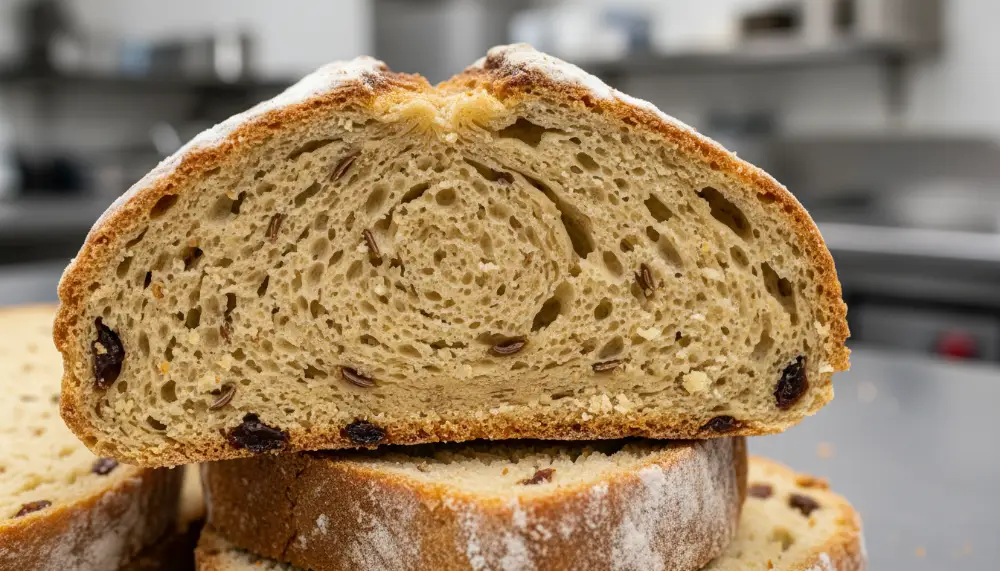
Sweet Variations and the ‘Spotted Dog’
In Ireland, a soda bread with fruit is affectionately called a ‘Spotted Dog’. To make yours truly professional, soak your currants or raisins in warm apple juice for 20 minutes before adding them. This prevents the fruit from sucking moisture out of the bread and ensures they remain plump and juicy during the high-heat bake. We avoid alcohol entirely in this recipe, so apple juice or even a strong black tea provides the perfect soaking medium without the need for whiskey or stout.
Another high-end sweet variation involves adding the zest of two lemons and a tablespoon of poppy seeds. This creates a bright, citrusy loaf that is perfect for afternoon tea. Always store your leftovers in Rubbermaid Brilliance Glass Storage Set to maintain that delicate balance of a crisp crust and soft interior, as glass storage prevents the bread from becoming ‘sweaty’ as it would in plastic.
Pro Tips for the Perfect Crust
The hallmark of a great Gluten Free Irish Soda Bread is the contrast between the craggy, crunchy exterior and the soft middle. To achieve this, don’t over-handle the dough. The more you touch it, the warmer the butter gets and the tougher the bread becomes. Use a light touch when shaping your round. Additionally, for an extra-crispy crust, you can place a small pan of water on the bottom rack of the oven during the first 15 minutes of baking. The steam will help the crust develop a beautiful golden hue before it sets.
Troubleshooting Common Issues
If your bread is too crumbly, it usually means it was overbaked or the flour blend lacked sufficient binder. If it is gummy in the center, you likely didn’t bake it long enough. Gluten-free bread needs to reach an internal temperature of about 205-210 degrees F. Use a digital thermometer to be sure. If the top is browning too fast, tent it loosely with foil for the last 15 minutes of baking. Remember, every oven is different, and gluten-free flours behave differently across various climates and humidity levels.