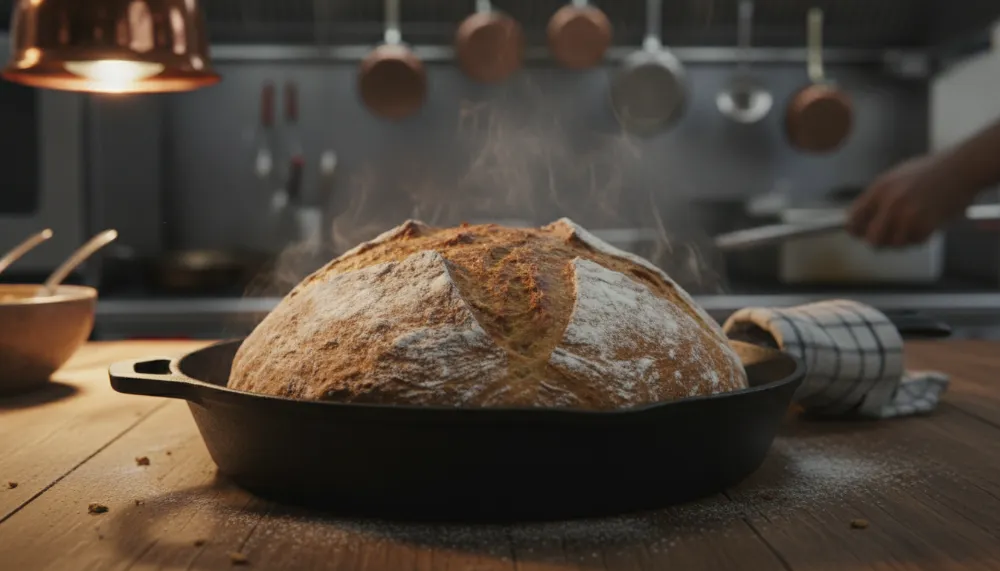
Experience the rustic charm of traditional baking with this hearty Cast Iron Irish Soda Bread, a recipe that combines a crunchy exterior with a soft, tender crumb. This no-knead masterpiece relies on the superior heat retention of a heavy skillet to deliver professional results every time.
Cast Iron Irish Soda Bread
Ingredients
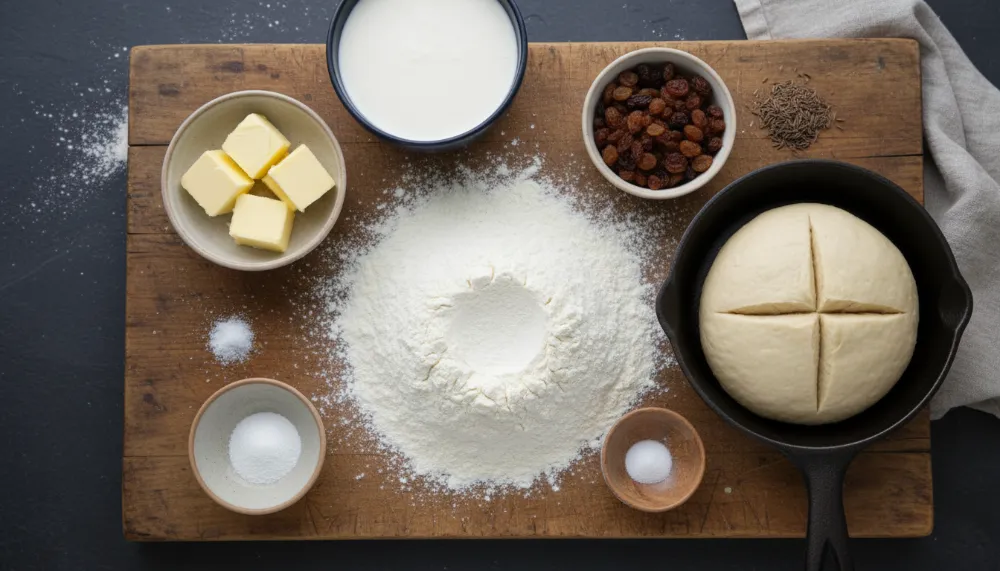
- 4 Cups All-Purpose Flour
- 1 Teaspoon Baking Soda
- 1 Teaspoon Salt
- 1.75 Cups Cold Buttermilk
- 4 Tablespoons Cold Butter (Cubed)
- 1 Tablespoon Honey or Sugar
Instructions
- 1 Preheat your oven to 400°F (200°C) and place a 10-inch or 12-inch cast-iron skillet inside to heat up.
- 2 In a large mixing bowl, whisk together the flour, baking soda, and salt until well combined.
- 3 Use your fingers or a pastry cutter to work the cold butter into the flour until it resembles coarse crumbs.
- 4 Make a well in the center and pour in the buttermilk and honey. Stir gently with a wooden spoon until a shaggy dough forms.
- 5 Turn the dough onto a lightly floured surface and gently shape into a round loaf. Do not over-knead.
- 6 Carefully remove the hot skillet from the oven, dust with a little flour, and place the dough inside. Score a deep ‘X’ on top.
- 7 Bake for 40-45 minutes until the bread is golden brown and sounds hollow when tapped. Let cool slightly before slicing.
The Historical Legacy of Irish Soda Bread
To truly appreciate Cast Iron Irish Soda Bread, one must look back to the mid-19th century. While the chemical leavening process was initially discovered by indigenous peoples in North America using pearl ash, it was the Irish who refined and popularized the use of bicarbonate of soda, or baking soda, during the 1830s. This period was marked by significant economic hardship, and for many Irish families, bread made with expensive yeast and refined flour was out of reach. The introduction of baking soda was a culinary revolution, allowing for a nutritious, filling loaf made from simple, inexpensive ingredients: soft wheat flour, salt, baking soda, and soured milk.
During the Great Famine, this bread became more than just a meal, it became a survival staple. Rural Irish homes typically lacked built-in ovens. Instead, they used a “bastible,” a heavy, three-legged cast-iron pot with a flat lid. The bastible was placed directly over the embers of a turf fire, and more hot coals were heaped onto the lid to create an even, oven-like heat. This ancient method is the direct ancestor of our modern Cast Iron Irish Soda Bread. The cast iron’s ability to hold and distribute heat evenly is what creates that iconic, thick crust that acts as a protective shell for the tender interior.
Why Cast Iron is the Superior Vessel for Baking
Baking Cast Iron Irish Soda Bread in a heavy skillet isn’t just about nostalgia, it is about thermodynamics. Cast iron has a high thermal mass, meaning it absorbs a massive amount of heat and radiates it steadily. When you place your dough into a preheated skillet, the immediate contact with the hot surface triggers a rapid expansion of gases within the dough, a process known as “oven spring.” This ensures that the bread rises effectively despite its lack of yeast. Furthermore, the porous nature of seasoned cast iron helps to wick away excess moisture from the bottom of the loaf, resulting in a crisp, deeply browned base that a standard baking sheet simply cannot achieve.
If you are looking to streamline your prep, the Ninja BN751 Professional Plus DUO Blender (https://amzn.to/3LCDyNR) is an excellent tool. While traditionally done by hand, you can use the pulse function to quickly cut cold butter into your flour, ensuring perfectly sized pearls of fat that contribute to a flaky, tender crumb. Its 1000W motor makes short work of dry ingredient blending, ensuring your baking soda is perfectly distributed.
The Science of the Soda and the Acid
The chemistry behind Cast Iron Irish Soda Bread is a fascinating reaction between an acid and a base. The baking soda (the base) reacts instantly with the lactic acid in the buttermilk. This reaction produces carbon dioxide bubbles, which are trapped within the flour’s gluten structure, causing the bread to rise. Unlike yeast breads that require hours of fermentation, soda bread is a race against time. Once the wet and dry ingredients meet, the clock starts ticking. This is why the instruction to “not over-knead” is so critical. Over-working the dough will collapse those precious bubbles and develop too much gluten, leading to a loaf that is more like a brick than a bread.
Professional Variations and Flavor Profiles
While the four-ingredient classic is sublime, modern culinary experts often elevate Cast Iron Irish Soda Bread with savory or sweet additions. Because we strictly avoid certain ingredients, we can look to high-quality beef and herbal alternatives to provide depth.
Savory Innovations (No Pork)
For a bold, steakhouse-style loaf, try adding Smoky Beef and Horseradish. Instead of traditional pork bits, use finely diced smoked beef or even high-quality beef jerky bits. Fold in one tablespoon of prepared horseradish and a teaspoon of cracked black pepper. The result is a robust bread that pairs perfectly with a hearty beef stew. To prepare these savory additions, the Cuisinart 8 Cup Food Processor (https://amzn.to/47Nhbg8) is an essential tool, allowing you to chop sun-dried tomatoes, beef bits, or fresh herbs like rosemary and chives in seconds, ensuring an even distribution throughout the dough.
Sweet Tea-Cake Variations
In Ireland, a sweet version of soda bread is often called a “Spotted Dog.” Traditionally, this involves raisins or currants. To keep this recipe professional and alcohol-free, soak your dried fruit in a mixture of apple juice and a splash of apple cider vinegar for 20 minutes before adding them to the dough. This plumps the fruit and adds a bright acidity that complements the buttermilk. Another variation is the “Stripy Cat,” which replaces fruit with large chunks of dark chocolate, turning the Cast Iron Irish Soda Bread into a sophisticated dessert loaf.
Tips for the Perfect Crust and Crumb
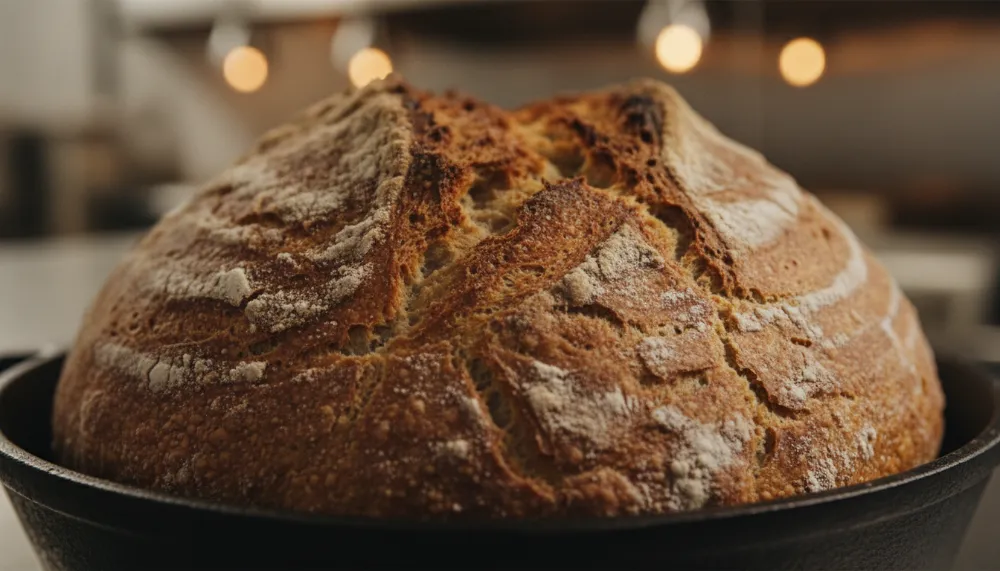
Achieving the perfect texture in your Cast Iron Irish Soda Bread requires attention to detail. First, always score the top with a deep ‘X’. Folklore says this lets the devil out, but scientifically, it allows the heat to penetrate the center of the dense loaf and gives the dough room to expand without cracking the base. Second, ensure your buttermilk is ice-cold. Cold ingredients prevent the butter from melting before it hits the oven, which is key to a light texture.
If you find yourself with leftovers, the Cosori 9-in-1 TurboBlaze Air Fryer 6 Qt (https://amzn.to/4hRWmVq) is the absolute best way to reheat a slice. It restores the crunch of the crust while keeping the interior moist, a feat that a microwave simply can’t manage. It’s also perfect for roasting vegetables to serve alongside your fresh bread.
Nutritional Overview of Soda Bread
Cast Iron Irish Soda Bread is a nutrient-dense food that provides sustained energy. A typical slice (approx. 55g) contains roughly 170 calories, 30 grams of carbohydrates, and 5 grams of protein. Because it uses buttermilk, it also provides a small amount of calcium and potassium. By using whole-wheat flour (often called “brown soda bread” in Ireland), you can significantly increase the fiber content, making it a more heart-healthy option. Since this recipe avoids pork and alcohol, it remains a clean, high-energy source suitable for various lifestyle requirements.
Storing and Preserving Your Bread
Freshly baked bread is a joy, but it can dry out quickly due to the lack of preservatives. To keep your Cast Iron Irish Soda Bread fresh for up to three days, store it in a Rubbermaid Brilliance Glass Storage Set (https://amzn.to/4oD0YkY). These leak-proof, airtight containers are perfect for maintaining the delicate moisture balance of the bread. For longer-term storage, soda bread freezes remarkably well. Slice the loaf first, then use a FoodSaver Vacuum Sealer Machine (https://amzn.to/4qWgVnS) to prevent freezer burn. You can then pull out individual slices and pop them directly into the toaster or air fryer for a quick, fresh-tasting breakfast.
Common Troubleshooting Questions
Why is my soda bread too dense? This is usually caused by over-mixing or using old baking soda. Remember, the reaction happens quickly, so work the dough as little as possible. Also, check the expiration date on your soda!
Why is the bottom of my bread burnt? Cast iron gets very hot. If your oven has a strong bottom heating element, try placing the skillet on a higher rack or putting a baking sheet on the rack below the skillet to deflect some of the direct heat.
Can I use a milk substitute? Yes, you can create a buttermilk substitute by adding one tablespoon of lemon juice or white vinegar to a cup of soy or almond milk. Let it sit for 10 minutes to curdle before using.