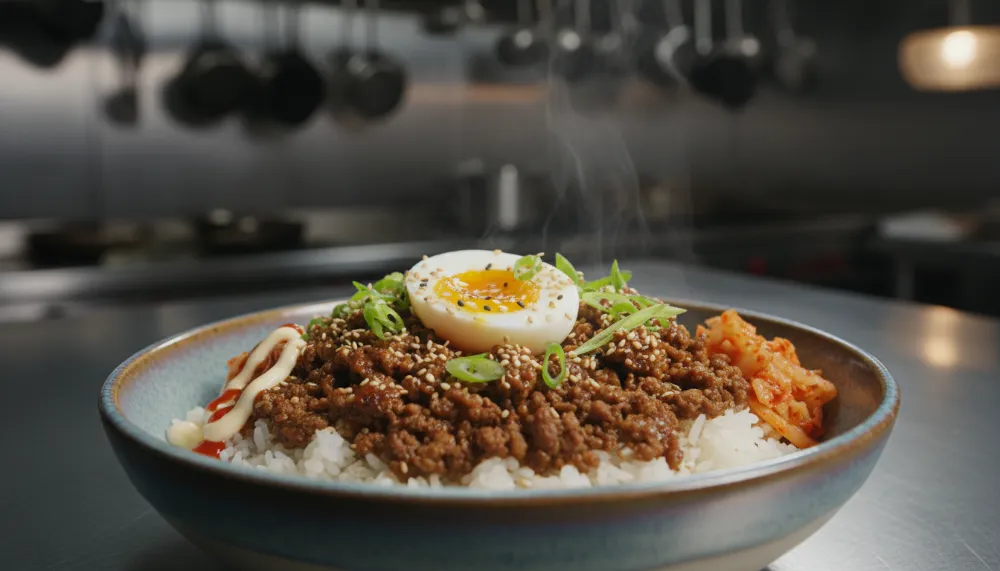
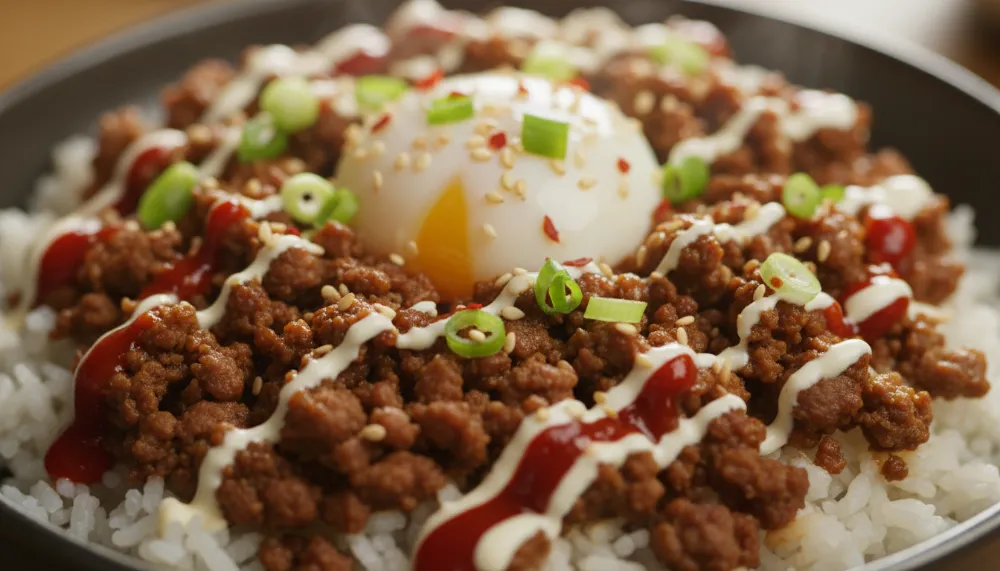
Experience the perfect balance of sweet, savory, and spicy flavors with this 15-minute Korean Ground Beef Bowl. This budget-friendly meal delivers restaurant-quality umami using simple pantry staples and fresh aromatics.
Korean Ground Beef Bowl
Ingredients
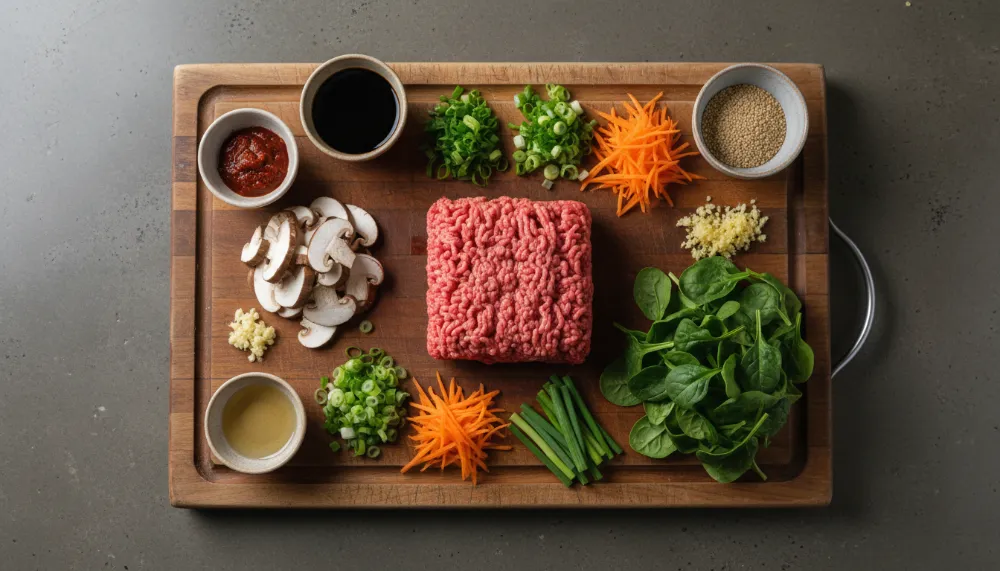
- 1 lb Lean Ground Beef (90% or higher)
- 3 cloves Garlic, minced
- 1 tsp Fresh Ginger, grated
- 1/2 cup Low-Sodium Soy Sauce
- 1/3 cup Brown Sugar, packed
- 2 tsp Toasted Sesame Oil
- 1/2 tsp Red Pepper Flakes (more for spice)
- 1 tbsp Rice Vinegar mixed with 1 tsp Honey
- 2 cups Cooked White or Brown Rice
- 3 Green Onions, thinly sliced
Instructions
- 1 In a large skillet over medium-high heat, brown the ground beef until cooked through. Drain excess fat.
- 2 Add minced garlic and grated ginger to the skillet. Cook for 1 minute until fragrant.
- 3 Stir in soy sauce, brown sugar, sesame oil, red pepper flakes, and the vinegar-honey mixture.
- 4 Simmer for 2-3 minutes to allow the sauce to thicken and coat the beef.
- 5 Serve over warm rice and garnish generously with sliced green onions and sesame seeds.
The Cultural Evolution of the Korean Ground Beef Bowl
The Korean Ground Beef Bowl is a fascinating example of culinary fusion, blending the deep, ancestral flavors of Korea with the fast-paced, efficiency-driven lifestyle of the modern Western kitchen. While traditional Korean barbecue, or Bulgogi, typically utilizes high-quality cuts of ribeye or sirloin sliced to paper-thin perfection, the ground beef variation offers a democratic alternative. This dish brings the essence of the Goguryeo era, where marinated meats were first grilled over open fires, into the 21st-century home kitchen without requiring a trip to a specialty butcher or hours of marination.
During the Joseon Dynasty, the preparation of beef was a highly refined art form, often reserved for royal courts. Dishes like Neobiani, the predecessor to modern Bulgogi, relied on the careful balance of soy sauce, pear juice, and aromatics. The Korean Ground Beef Bowl preserves this delicate balance, using ground meat as a vehicle to absorb those complex flavors much faster than solid cuts. By utilizing ground beef, we increase the surface area available for caramelization, a process known to chefs as the Maillard reaction, which creates the deeply savory, slightly sweet crust that makes this bowl so addictive.
Mastering the Professional Flavor Profile Without Alcohol
In professional kitchens, achieving the signature bright yet deep acidity of Korean cuisine often involves the use of Mirin or Rice Wine. However, for those avoiding alcohol, the secret lies in mimicking the fermented sweetness and sharp tang of those ingredients. A professional-grade substitute is a combination of high-quality rice vinegar and a touch of honey or brown sugar. This provides the necessary enzymatic action to balance the richness of the beef fat without the need for alcohol.
The Role of Aromatics and Umami
To elevate your Korean Ground Beef Bowl, you must treat your aromatics with respect. Never use jarred garlic or dried ginger if you can avoid it. Freshly grated ginger provides a citrusy, peppery heat that cuts through the sugar, while fresh garlic, when sautéed just until golden, adds a buttery depth. For an even more authentic flavor, many professionals use a Cuisinart 8 Cup Food Processor (https://amzn.to/47Nhbg8) to finely mince a mixture of garlic, ginger, and even a small piece of Asian pear. The pear contains calpain, a natural enzyme that tenderizes the beef while providing a subtle, floral sweetness that is quintessential to Korean beef dishes.
Essential Tools for Culinary Success
While the Korean Ground Beef Bowl is a simple one-pan meal, using the right tools can drastically improve the texture and ease of preparation. Here are my professional recommendations for this recipe:
- Ninja BN751 Professional Plus DUO Blender (https://amzn.to/3LCDyNR): While primarily a blender, its power is perfect for emulsifying your soy-ginger-garlic sauce or creating a smooth chili paste to drizzle over the top.
- Cosori 9-in-1 TurboBlaze Air Fryer 6 Qt (https://amzn.to/4hRWmVq): This is the ultimate companion for your beef bowl. Use it to roast broccoli, bok choy, or snap peas to serve on the side, providing a crispy, healthy contrast to the soft rice and beef.
- Rubbermaid Brilliance Glass Storage Set of 9 (https://amzn.to/4oD0YkY): If you are meal prepping, these are essential. They are leak-proof and allow you to see exactly which portion is yours, keeping the rice from becoming soggy.
- FoodSaver Vacuum Sealer Machine (https://amzn.to/4qWgVnS): For those who buy ground beef in bulk, this tool is a lifesaver. It prevents freezer burn and keeps your beef as fresh as the day you bought it.
Nutritional Depth and Dietary Considerations
The Korean Ground Beef Bowl is more than just a flavor powerhouse, it is a nutritional workhorse. When using 90% lean beef, a single serving provides a significant amount of high-quality protein, essential for muscle repair and satiety. Furthermore, beef is one of the best dietary sources of Vitamin B12, which supports nerve function, and Zinc, which is vital for a healthy immune system. For those looking to manage sodium levels, replacing traditional soy sauce with liquid aminos or a reduced-sodium variety is a professional tip that doesn’t sacrifice the “soul” of the dish.
Carbohydrates in this dish can be tailored to your specific needs. While short-grain white rice is the traditional choice for its sticky, comforting texture, brown rice adds a nutty flavor and a boost of manganese and fiber. For a lower-carb variation, cauliflower rice works exceptionally well here, as it acts as a sponge for the delicious soy and ginger glaze that pools at the bottom of the bowl.
The Professional Technique: Caramelization vs. Boiling
The most common mistake home cooks make with a Korean Ground Beef Bowl is overcrowding the pan. When you add a pound of beef to a small, lukewarm skillet, the meat releases its juices and ends up “boiling” in its own liquid. To avoid this, ensure your skillet is smoking hot before adding the beef. Break the meat into large chunks and let them sit undisturbed for 2-3 minutes. This allows the sugars in the beef and the residual fats to create a dark, crispy crust. Only once you have that browning should you begin to break the meat into smaller crumbles. This technique adds layers of texture, transforming a simple ground beef dish into something that feels sophisticated and intentional.
Creative Variations: Chicken, Turkey, and Vegetables
While beef is the star of this recipe, the flavor profile is incredibly versatile. Ground chicken or ground turkey are excellent lean alternatives. Because these meats have less fat than beef, you may want to increase the toasted sesame oil by an extra teaspoon to ensure a moist mouthfeel. For a vegetarian-friendly option, crumbled extra-firm tofu or finely chopped mushrooms can be treated with the exact same soy, ginger, and garlic sauce. The mushrooms, in particular, provide a natural earthiness that mimics the umami of beef beautifully.
The Art of the Topping
No Korean Ground Beef Bowl is complete without the right garnishes. Beyond green onions, consider adding a “jammy” chicken egg. A 6-minute boiled egg with a soft, runny yolk creates a rich sauce that binds the rice and meat together. Quick-pickled cucumbers, made by soaking sliced cucumbers in rice vinegar, sugar, and chili flakes for 10 minutes, provide a cold, crunchy acidity that cleanses the palate between bites of the savory beef.