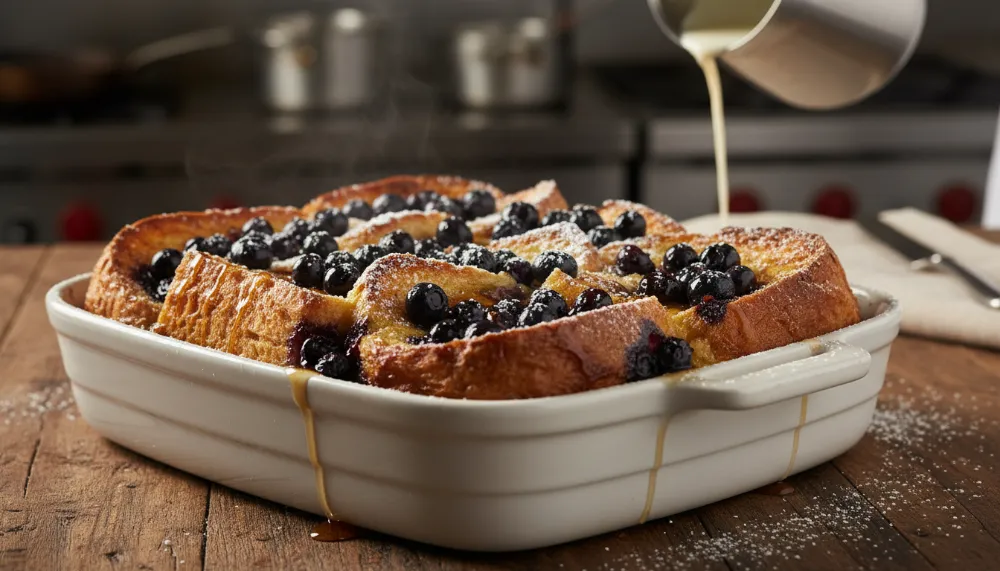
Wake up to the scent of bubbling berries and warm cinnamon with this foolproof Overnight Blueberry French Toast Casserole. This decadent breakfast bake transforms humble bread into a custardy masterpiece while you sleep, making it the perfect stress-free solution for your next family brunch.
Overnight Blueberry French Toast Casserole
Ingredients
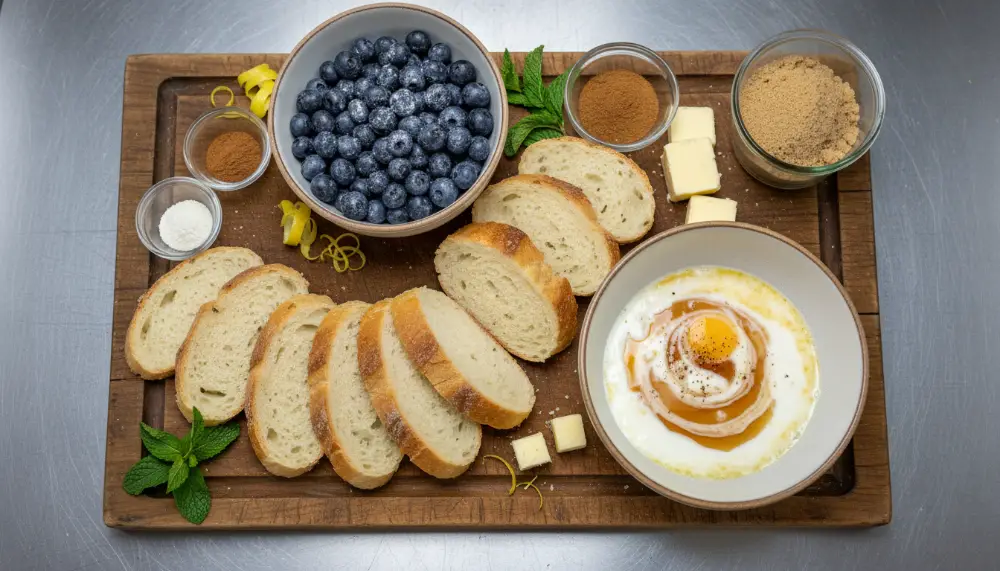
- – 12-14 cups cubed Brioche or Challah bread
- – 2 cups fresh blueberries
- – 8 large eggs
- – 2.5 cups whole milk
- – 1/2 cup heavy cream
- – 3/4 cup maple syrup (plus extra for serving)
- – 1 tablespoon alcohol-free vanilla bean paste
- – 1 teaspoon ground cinnamon
- – 1/2 teaspoon ground nutmeg
- – 1/4 teaspoon salt
- – 1/2 pound cooked and crumbled beef breakfast sausage (optional savory addition)
Instructions
- Grease a 9×13 inch baking dish generously with butter.
- Place half of the bread cubes in the dish. Top with 1 cup of blueberries and the crumbled beef sausage if using.
- Layer the remaining bread cubes and blueberries on top.
- In your Ninja BN751 Professional Plus DUO Blender, combine eggs, milk, cream, syrup, vanilla paste, cinnamon, nutmeg, and salt. Blend for 20 seconds until perfectly smooth.
- Pour the mixture evenly over the bread. Press down gently with a spatula to ensure all bread is submerged.
- Cover tightly with foil and refrigerate for at least 8 hours or overnight.
- In the morning, preheat oven to 350°F (175°C). Let the dish sit at room temperature for 20 minutes while the oven heats.
- Bake covered for 30 minutes, then remove foil and bake for another 25-30 minutes until golden and set.
- Serve warm with extra maple syrup.
The Historical Journey of a Morning Classic
The Overnight Blueberry French Toast Casserole is a contemporary evolution of a culinary staple that dates back millennia. It combines the ancient technique of repurposing stale bread with the modern convenience of make-ahead meal planning that emerged in 20th-century American kitchens. The dish’s lineage can be traced through three distinct phases. The earliest recorded precursor is the Roman aliter dulcia, described in the Apicius cookbook. This involved white bread with the crusts removed, soaked in milk and beaten eggs, then fried and doused in honey. By the 15th century, the dish became a widespread method for salvaging stale bread. In France, it was known as pain perdu, or lost bread, and in England as poor knights of Windsor. These versions were often fried in oil or butter and served as a frugal dessert. The transition from individual stove-top slices to a baked casserole was driven by the post-WWII rise of convenience culture. While traditional French toast was a labor-intensive morning task, the overnight method, pioneered in suburban American kitchens and shared through community cookbooks, allowed the custard to fully saturate the bread while the cook slept. By the 1980s, the Overnight Breakfast Casserole had become a standardized staple for holiday brunches like Christmas and Easter.
The Science of the Perfect Soak
Achieving the ideal texture in an Overnight Blueberry French Toast Casserole requires an understanding of bread structure and protein coagulation. The goal is a custardy interior that holds its shape without becoming mushy, topped with a crisp, golden exterior. This is why bread selection is paramount. Using a Cuisinart 8 Cup Food Processor to slice your bread into uniform cubes ensures even absorption. Brioche and Challah are the gold standards because of their high egg and butter content, which creates a sturdy crumb that resists disintegrating in the liquid. If you use a softer white bread, the casserole may collapse into a dense mass. The overnight rest is not just for convenience, it allows the egg proteins to fully penetrate the starch granules of the bread. This molecular bonding creates a cohesive structure that rises slightly during baking, much like a souffle. When you pour your custard, which is best mixed in a high-powered Ninja BN751 Professional Plus DUO Blender to ensure the eggs and fats are perfectly emulsified, you are initiating a slow hydration process that is superior to the quick-dip method used for pan-fried French toast.
Professional Flavor Variations and Dietary Substitutions
Chefs often elevate this dish by introducing complex aromatics and textures that move beyond simple cinnamon and sugar. One popular variation is the Lemon-Cardamom and Ginger profile. Replace standard cinnamon with a blend of ground cardamom and a touch of ground ginger. Add 1 tablespoon of fresh lemon zest and 2 tablespoons of freshly squeezed lemon juice to the egg custard. This bright profile cuts through the richness of the bread. To add a savory dimension without using prohibited ingredients, serve with seared beef bacon or crumbled chicken sausage. Professional versions sometimes incorporate 1/2 pound of cooked, crumbled beef breakfast sausage directly into the layers of bread and blueberries before the overnight soak for a sweet-and-savory experience. Following professional standards while adhering to mandatory restrictions is simple. For pork substitutes, use Beef Bacon, Chicken Apple Sausage, or Smoked Beef Strips. For alcohol substitutes, instead of vanilla extract containing alcohol, use alcohol-free vanilla bean paste or scrapings from a whole vanilla bean. Instead of boozy syrups or sherry, replace with a reduction of unsweetened apple juice, white grape juice, or orange juice mixed with a splash of apple cider vinegar for acidity. Instead of wine in fruit sauces, use a berry coulis made by simmering blueberries in pomegranate juice and honey.
Nutritional Profile and Ingredient Deep Dive
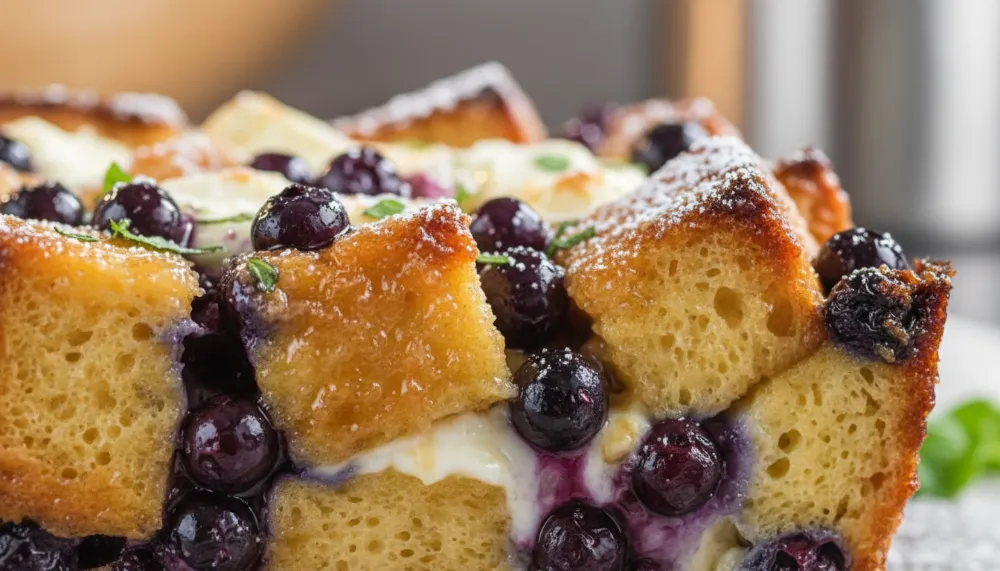
The nutritional value of an Overnight Blueberry French Toast Casserole varies depending on the type of bread and sweeteners used. A typical professional serving generally follows this profile: 270 to 380 kcal, with total fat ranging from 8g to 17g depending on the use of whole milk or heavy cream. Because of the high egg content, it provides between 11g and 16g of protein per serving. It is also a good source of Vitamin D, Calcium, and Iron. Blueberries, the star of this dish, bring more than just color. They are packed with anthocyanins, which are powerful antioxidants. When baked, the berries burst, releasing juices that marble through the custard, creating natural pockets of sweetness. If you find yourself with leftovers, reheating them in a Cosori 9-in-1 TurboBlaze Air Fryer 6 Qt is the best way to restore that initial crispness without drying out the center. The air fryer’s rapid circulation mimics the convection of a professional oven, perfect for maintaining the dish’s integrity.
Mastering Storage and Meal Prep
This dish is the epitome of meal prep excellence. If you are cooking for a small household, you can divide the recipe into smaller portions. For long-term storage, use a FoodSaver Vacuum Sealer Machine to freeze individual slices. This keeps the ingredients fresh longer and prevents freezer burn, which is the enemy of custardy textures. For short-term refrigeration, the Rubbermaid Brilliance Glass Storage Set of 9 is ideal. These leak-proof, stackable containers are perfect for keeping the casserole fresh for up to four days. To reheat, simply pop a slice into the air fryer or oven until warmed through. This makes it a great option for busy weekday mornings when you want a gourmet breakfast without the gourmet effort. When prepping, always remember to let the casserole sit at room temperature for about 20 minutes before putting it in a hot oven if you are using glass or ceramic dishes to prevent thermal shock. This professional tip ensures your cookware lasts as long as your recipes.