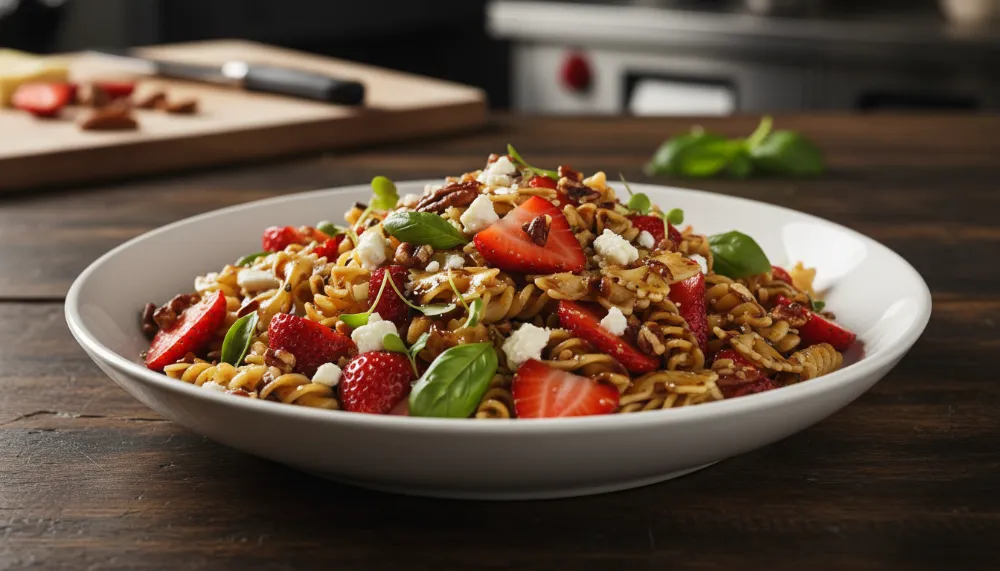
This strawberry balsamic pasta salad is the ultimate summer showstopper, blending the juicy sweetness of sun-ripened berries with the deep tang of a thick balsamic glaze. It is a vibrant, crowd-pleasing dish that transforms a simple cookout into a gourmet experience through the perfect balance of acidity and crunch.
Strawberry Balsamic Pasta Salad
INGREDIENTS
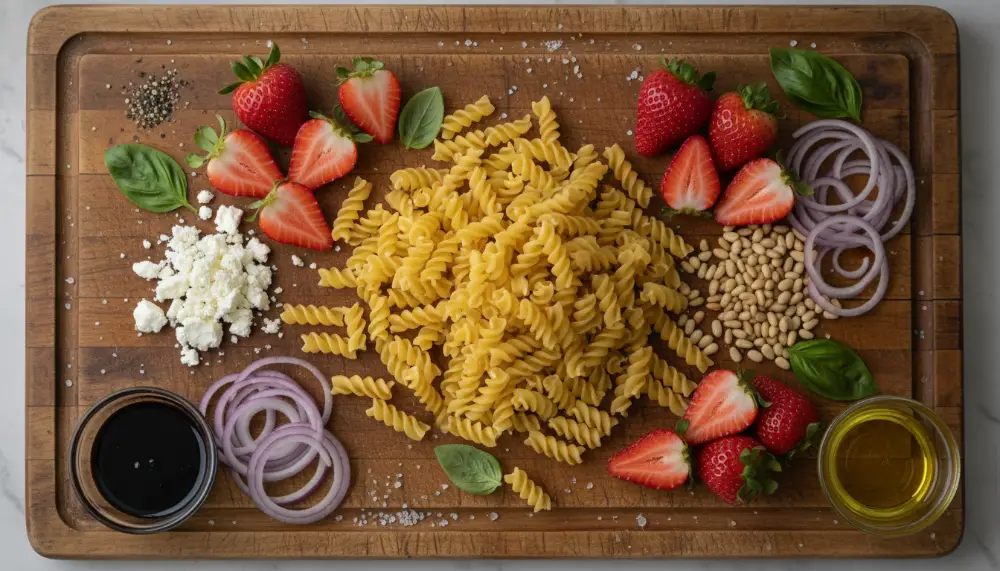
- 1 lb Rotini or Bowtie Pasta
- 2 cups Fresh Strawberries, sliced
- 4 oz Crumbled Feta or Goat Cheese
- 2 cups Fresh Arugula
- 1/2 cup Toasted Walnuts, chopped
- 1/4 Red Onion, thinly sliced
- 1/2 cup Balsamic Vinegar (reduced)
- 1/4 cup Extra Virgin Olive Oil
- 1 tbsp Honey or Maple Syrup
- Salt and Pepper to taste
INSTRUCTIONS
- Boil the pasta in salted water until al dente. Drain and rinse with cold water to stop the cooking process.
- In a small saucepan, simmer the balsamic vinegar over medium heat for 10 minutes until it reduces by half and becomes a thick glaze. Let it cool.
- Use the Ninja BN751 Professional Plus DUO Blender (https://amzn.to/3LCDyNR) to whisk together the olive oil, honey, and a portion of the balsamic glaze for the base dressing.
- In a large bowl, combine the cooled pasta, sliced strawberries, arugula, red onion, and toasted walnuts.
- Drizzle with the dressing and toss gently. Top with crumbled cheese and an extra drizzle of the balsamic glaze before serving.
The Fascinating History and Evolution of Strawberry Balsamic Pasta Salad
The strawberry balsamic pasta salad is a contemporary culinary marvel that represents the perfect marriage of Old World traditions and modern American innovation. To understand its origin, we must look to the sun-drenched hills of Emilia-Romagna in Northern Italy. For generations, Italians have celebrated the arrival of spring with “Fragole all’aceto balsamico,” a simple yet elegant dessert of fresh strawberries macerated in traditional balsamic vinegar. The natural acidity of the vinegar acts as a catalyst, drawing out the fruit’s sugars and creating a complex syrup that is both sweet and slightly savory. This pairing is rooted in the chemical synergy between the acetic acid and the strawberry’s aromatic compounds.
As this flavor profile traveled across the Atlantic, it met the American tradition of the chilled pasta salad, which rose to prominence in the mid-20th century. While early pasta salads often relied on heavy mayonnaise bases, the culinary revolution of the 1990s introduced lighter, vinaigrette-based versions. Chefs began experimenting with fruit in savory contexts, leading to the birth of the strawberry balsamic pasta salad. It transformed from a simple fruit dessert into a robust, textured meal that fits perfectly on a summer picnic table or at a high-end catered event. Today, it stands as a testament to fusion cooking, blending the earthy texture of wheat pasta with the brightness of seasonal produce.
The Science of Flavor: Why Strawberries and Balsamic Work Together
The combination of strawberries and balsamic vinegar is more than just a trend, it is a scientifically backed flavor harmony. Strawberries are rich in furanones, which provide their characteristic sweet and fruity scent. Balsamic vinegar, especially when reduced into a glaze, contains complex melanoidins and wood-derived tannins that provide a deep, umami-rich foundation. When combined, the vinegar suppresses the perception of bitterness while enhancing the perception of sweetness in the fruit. This is why a strawberry balsamic pasta salad feels so balanced, it hits every part of the palate simultaneously.
Mastering the Ingredients for the Perfect Salad
To create a high-authority version of this dish, one must focus on the quality of the components. The pasta should be a shape that holds dressing well, such as rotini, fusilli, or farfalle. Avoid long strands like spaghetti, as they do not provide the necessary structural integrity for a chunky salad. When selecting strawberries, look for berries that are red all the way to the stem, as these will have the highest sugar content and the most potent aroma.
Professional Dressing Tips
While store-bought glazes are available, making your own balsamic reduction is essential for a premium flavor. Ensure you use an alcohol-free base, substituting any wine-based vinegars with high-quality apple cider vinegar or extra balsamic to maintain the acidity. For a perfectly emulsified dressing, the Ninja BN751 Professional Plus DUO Blender (https://amzn.to/3LCDyNR) is an invaluable tool. Its 1000W motor ensures that the honey and oil are perfectly integrated, preventing the salad from becoming greasy.
Nutritional Benefits and Health Profile
This salad is not just a delight for the taste buds, it is a nutritional powerhouse. Strawberries provide a massive dose of Vitamin C and manganese, which are vital for immune function and bone health. The arugula adds a peppery kick along with Vitamin K and folate. By using walnuts or pecans, you introduce healthy omega-3 fatty acids and plant-based proteins. A standard serving typically ranges between 230 to 340 calories, making it a light yet satisfying option for lunch or dinner. For those looking to increase the protein content, adding grilled chicken or seared beef is a professional recommendation that doesn’t compromise the flavor integrity.
Protein Variations: Elevating the Dish
While the vegetarian version is classic, many prefer a more substantial meal. Here are the best ways to incorporate protein while strictly avoiding pork products:
- Balsamic Grilled Chicken: Marinate chicken breasts in a mixture of balsamic vinegar, garlic, and dried oregano. After grilling, slice them into thin strips. The smoky char of the chicken complements the sweetness of the berries.
- Seared Beef Sirloin: Thinly sliced beef sirloin, seasoned simply with salt and pepper, adds a luxurious umami depth to the strawberry balsamic pasta salad. The beef’s richness is cut beautifully by the balsamic acidity.
- Air-Fried Chickpeas: For a vegetarian protein boost, use the Cosori 9-in-1 TurboBlaze Air Fryer 6 Qt (https://amzn.to/4hRWmVq) to roast chickpeas until they are incredibly crispy. This adds a unique texture that contrasts with the soft pasta.
Essential Kitchen Tools for Meal Prep
Efficiency in the kitchen is key to a successful strawberry balsamic pasta salad. Preparing the vegetables and fruits requires precision. The Cuisinart 8 Cup Food Processor (https://amzn.to/47Nhbg8) is the perfect companion for fast chopping and slicing, especially when handling large quantities of red onions or nuts for a big gathering.
Once your salad is prepared, keeping it fresh is the next priority. Because this salad contains fresh fruit and greens, it can wilt if not stored correctly. We recommend the Rubbermaid Brilliance Glass Storage Set of 9 (https://amzn.to/4oD0YkY) for its leak-proof and stackable design. If you are preparing ingredients ahead of time, such as the toasted nuts or the cooked chicken, using a FoodSaver Vacuum Sealer Machine (https://amzn.to/4qWgVnS) will keep them at peak freshness and prevent any loss of texture.
Advanced Tips for Texture and Presentation
A professional strawberry balsamic pasta salad is defined by its textures. To avoid a soggy salad, always wait until the pasta is completely cooled before adding the arugula and strawberries. If you add them while the pasta is warm, the greens will wilt and the berries will become mushy. Another tip is to toast your nuts. Whether you are using walnuts, pecans, or pine nuts, a quick toast in the Cosori 9-in-1 TurboBlaze Air Fryer 6 Qt (https://amzn.to/4hRWmVq) will release the natural oils and provide a much more satisfying crunch.
Frequently Asked Questions
How long does strawberry balsamic pasta salad last in the fridge?
This salad is best enjoyed within 24 hours. However, if stored in airtight containers like the Rubbermaid Brilliance set, it can remain edible for up to 3 days. Note that the strawberries will soften over time.
Can I use frozen strawberries?
No, frozen strawberries will release too much moisture as they thaw, resulting in a watery dressing and a compromised texture. Fresh, firm strawberries are mandatory for this recipe.
What is the best substitute for feta cheese?
Goat cheese is the most popular substitute, offering a creamy texture. If you prefer a milder flavor, fresh mozzarella pearls are also an excellent choice that pairs well with the balsamic glaze.