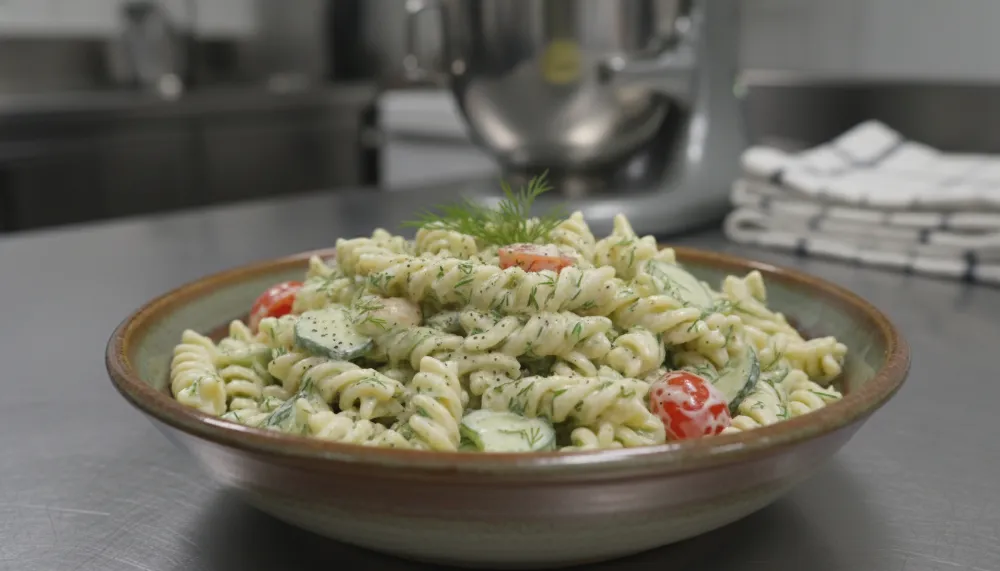
Experience the perfect harmony of garden-fresh herbs and velvety textures with this masterclass in creating the ultimate creamy dill pasta salad. This recipe transforms simple pantry staples into a sophisticated side dish that anchors any gathering with its bright, zesty profile.
Creamy Dill Pasta Salad
Ingredients
- ▢ 1 lb Rotini or Fusilli pasta
- ▢ 1 cup high-quality Mayonnaise
- ▢ 1/2 cup Plain Greek Yogurt
- ▢ 1/4 cup Pickle Brine
- ▢ 1/2 cup Fresh Dill, finely chopped
- ▢ 1 cup English Cucumber, diced
- ▢ 1/2 cup Red Onion, finely minced
- ▢ 1/2 cup Celery, diced
- ▢ 1 cup Sharp Cheddar Cheese, cubed
- ▢ 1 tbsp Lemon Juice
- ▢ 1 tsp Garlic Powder
- ▢ Salt and Black Pepper to taste
Instructions
- Boil pasta in salted water until al dente. Drain and rinse with cold water immediately.
- In a large mixing bowl, whisk together mayonnaise, Greek yogurt, pickle brine, lemon juice, and garlic powder until smooth.
- Stir in the fresh dill, red onion, celery, and cucumber into the dressing.
- Add the cooled pasta and cheddar cheese cubes to the bowl. Fold gently until every noodle is coated.
- Season with salt and pepper. Chill for at least 2 hours before serving to allow flavors to meld.
The Fascinating History of Cold Pasta Salads
The creamy dill pasta salad we adore today is a culinary hybrid that bridges centuries of food evolution. While pasta is quintessentially Italian, the concept of serving it cold with a heavy, creamy dressing is largely an American innovation, rooted in the mid-20th-century picnic and potluck culture. Historically, the roots of cold starch-based salads can be traced back to European potato salads and Mediterranean grain salads. In the Mediterranean, particularly within Jewish culinary traditions, “pasta fredda” was a common solution for Sabbath meals where cooking was prohibited, though these early versions relied on olive oil rather than cream. As Italian immigrants brought pasta to the United States, it eventually met the burgeoning American obsession with mayonnaise in the 1940s and 50s. The addition of dill, an herb prominent in Eastern European and Scandinavian cooking, provided a refreshing counterpoint to the richness of the dressing. This fusion created the modern creamy dill pasta salad, a dish that signifies summer, community, and the blending of diverse culinary influences. Today, it remains a staple because it is both a canvas for seasonal produce and a comforting, reliable crowd-pleaser.
The Science of the Perfect Dressing
Creating a creamy dill pasta salad that doesn’t turn dry or gummy requires an understanding of starch and emulsification. When pasta cools, it undergoes a process called starch retrogradation, where the starch molecules realign and begin to absorb moisture from their surroundings. This is why many pasta salads seem to “disappear” their dressing overnight. To combat this, professional chefs use a two-step dressing method. First, tossing the warm pasta in a splash of acidic liquid, like pickle brine or apple cider vinegar, seasons the noodle from the inside out. Second, using a combination of mayonnaise and Greek yogurt provides a stable emulsion that clings to the pasta without feeling excessively heavy. For those looking to achieve a professional-grade consistency, the Ninja BN751 Professional Plus DUO Blender is a game-changer. Its 1000W motor can emulsify your herbs and oils into the dressing base, ensuring that every drop of sauce is infused with the essence of fresh dill. This blender is also perfect for creating additional components like tahini sauces or harissa pastes for other variations of this dish.
Protein Variations: Elevating the Dish Without Pork
While traditional macaroni salads often include ham, the creamy dill pasta salad excels with a variety of pork-free proteins that add substance and flavor. For a lean and tender option, herb-poached chicken breast is the gold standard. Shredding the chicken allows it to soak up the dill dressing, ensuring every bite is flavorful. If you prefer a heartier, more savory profile, thinly sliced grilled beef tips or chilled steak can transform this side dish into a main course. The earthy notes of beef pair exceptionally well with the pungency of red onion and the brightness of dill. For a vegetarian powerhouse, roasted chickpeas are a magnificent addition. Using the Cosori 9-in-1 TurboBlaze Air Fryer 6 Qt, you can roast chickpeas until they are perfectly crisp, providing a textural contrast to the soft pasta. This air fryer is also ideal for roasting other vegetables like bell peppers or zucchini to add a charred, smoky depth to your salad without the need for additional oils.
Essential Techniques for Vegetable Preparation
The crunch of a creamy dill pasta salad is just as important as the creaminess. Consistency in dicing ensures that you get a bit of every ingredient in every forkful. This is where a reliable tool like the Cuisinart 8 Cup Food Processor becomes essential. It allows for fast, uniform chopping of celery, red onions, and pickles, which is a meal prep essential when cooking for large groups. When preparing your vegetables, consider the water content. For example, removing the seeds from your cucumbers prevents the salad from becoming watery as it sits. Similarly, soaking minced red onions in cold water for ten minutes before adding them to the salad can take the “bite” out of them, leaving only the sweet, crisp flavor. This attention to detail is what separates a standard deli salad from a high-authority culinary creation.
Flavor Substitutions: Depth Without Alcohol
In many gourmet recipes, white wine is used to add acidity and complexity to dressings, however, for this creamy dill pasta salad, we utilize superior alcohol-free alternatives. To achieve that signature “tang,” we rely heavily on lemon juice and high-quality vinegars. Apple cider vinegar offers a fruity depth, while white balsamic vinegar provides a sophisticated sweetness that mimics the profile of a dry white wine. Another professional secret is the use of verjus, the juice of unfermented grapes, which offers a complex acidity without the alcohol. If you find the dressing needs more body, a teaspoon of Dijon mustard can act as a bridge between the fats and the acids, adding a subtle heat that complements the dill perfectly. These substitutions ensure the dish remains bright and balanced, cutting through the richness of the mayonnaise with precision.
Storage and Longevity: Keeping it Fresh
Proper storage is the final hurdle in maintaining the integrity of your creamy dill pasta salad. Because this dish contains dairy and mayonnaise, it must be kept at a safe temperature. For meal prep enthusiasts, the Rubbermaid Brilliance Glass Storage Set of 9 is the ideal choice. These containers are leak-proof and stackable, making them perfect for transporting to picnics or storing in a crowded refrigerator. If you are preparing ingredients in bulk, such as the pasta or the chopped vegetables, the FoodSaver Vacuum Sealer Machine can keep your components fresh for significantly longer, preventing the oxidation that can dull the vibrant green of the fresh dill. When ready to serve, if the pasta has absorbed too much dressing, a quick stir with a tablespoon of milk or a splash of pickle brine will revive the creamy texture instantly.
The Art of the Herb: Fresh vs. Dried Dill
While dried herbs have their place in slow-cooked stews, the creamy dill pasta salad demands the vibrancy of fresh dill. Fresh dill contains volatile oils that provide a grassy, citrus-like aroma that dried dill simply cannot replicate. To get the most out of your herbs, finely chop them just before adding them to the dressing. This releases the maximum amount of flavor. If you find yourself in a pinch and must use dried dill, remember the 1:3 ratio: one tablespoon of dried herbs is roughly equivalent to three tablespoons of fresh. However, for a truly high-authority result, always opt for the fresh bunch, ensuring the fronds are bright green and not wilting. The visual appeal of the emerald green flecks against the white dressing is a hallmark of this classic dish.