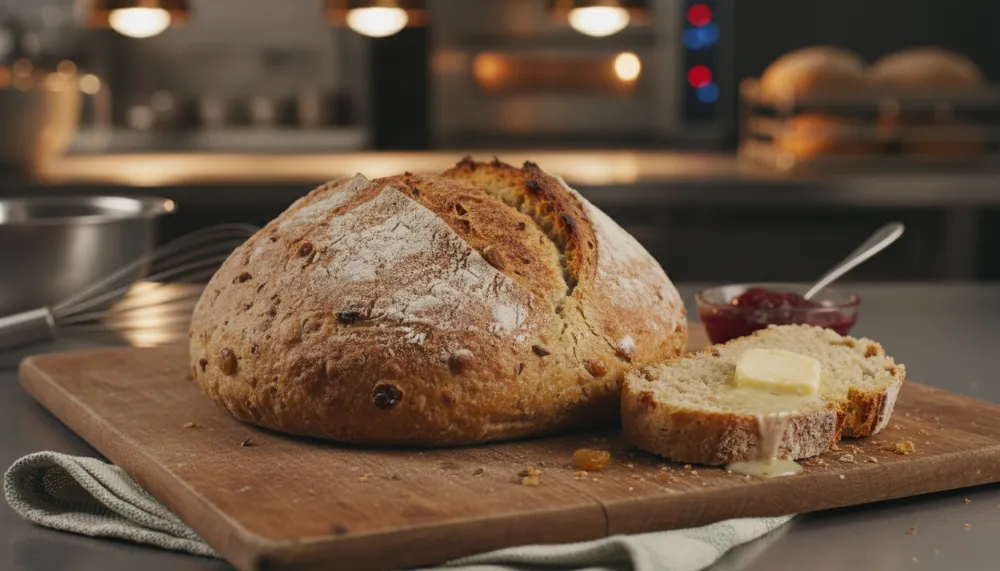
Experience the rustic charm of the Emerald Isle with this Quick Irish Soda Bread, a no-yeast wonder that yields a crunchy crust and a tender, steaming center in under an hour. This traditional staple combines minimal effort with maximum flavor, making it the perfect companion for any hearty meal.
Quick Irish Soda Bread
Ingredients
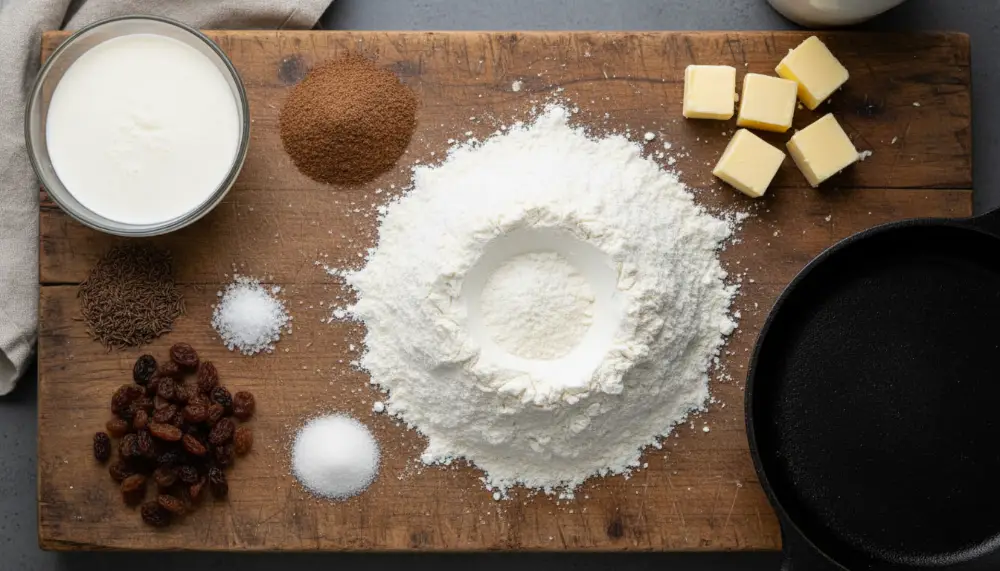
- 1 4 cups All-Purpose Flour (or 2 cups white, 2 cups whole-meal)
- 2 1 tsp Baking Soda
- 3 1 tsp Salt
- 4 1 3/4 cups Cold Buttermilk
- 5 4 tbsp Cold Butter (cubed)
- 6 1 Large Egg (optional, for richer crumb)
Instructions
- 1 Preheat your oven to 425°F (220°C). Grease a baking sheet or use a Dutch oven.
- 2 In a large bowl, whisk together the flour, baking soda, and salt.
- 3 Use your fingers or a pastry cutter to rub the cold butter into the flour until it resembles coarse crumbs.
- 4 Make a well in the center and pour in the buttermilk (and egg if using). Stir gently with a wooden spoon until a shaggy dough forms.
- 5 Turn dough onto a floured surface. Shape into a round loaf about 1.5 inches thick. DO NOT over-knead.
- 6 Place on the baking sheet and use a sharp knife to cut a deep cross into the top.
- 7 Bake for 30 to 35 minutes until the bottom sounds hollow when tapped. Let cool for 10 minutes before slicing.
The Fascinating History of Quick Irish Soda Bread
While various cultures throughout history used forms of potash or wood ash for leavening, the distinct version of Quick Irish Soda Bread that we recognize today originated in Ireland during the early 1830s. Its emergence was not a result of culinary trend-seeking but was born of agricultural necessity and economic hardship. The climate of Ireland was perfectly suited for growing “soft wheat,” a variety that is lower in gluten compared to the hard wheat grown in warmer climates like Italy or the United States. This soft wheat was notoriously difficult to use with yeast, as it lacked the structural protein needed to trap gases for a high rise. However, soft wheat reacts beautifully with chemical leaveners like bicarbonate of soda, creating a tender, cake-like crumb.
During the mid-19th century, particularly during the Great Famine (1845–1852), yeast was an expensive luxury that was difficult for isolated rural families to maintain. Baking soda provided a cheap, reliable, and incredibly fast alternative that did not require hours of proofing. Because many Irish families in the countryside lacked traditional ovens, the bread was originally baked in “bastible” pots, which were heavy cast-iron pots with tight lids. These pots were placed directly over open peat fires, with hot embers piled on the lid to create a surround-heat effect. This method produced the signature dense texture and rugged, hard crust that defines authentic Quick Irish Soda Bread.
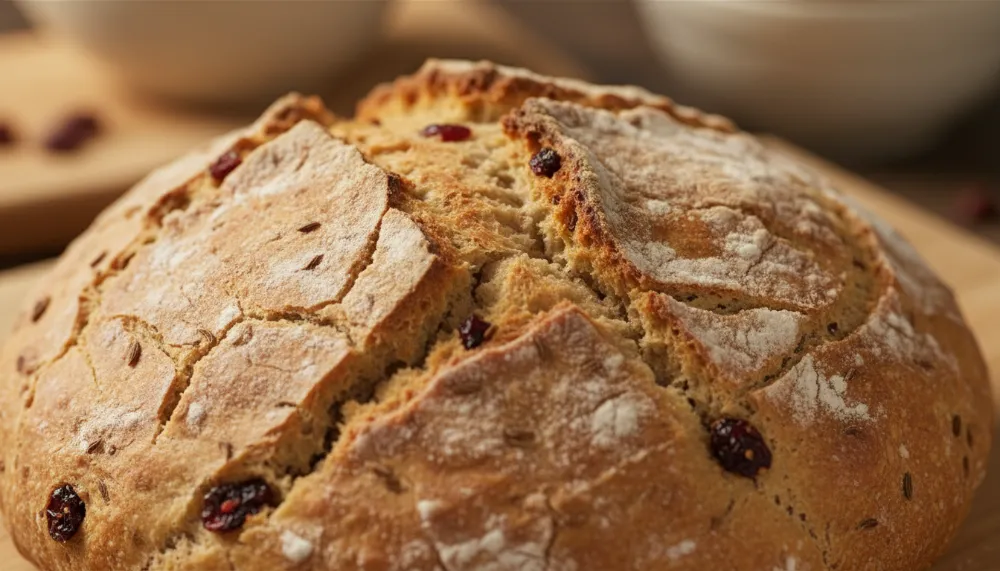
There is also deep symbolism carved into every loaf. The traditional deep cross cut into the top of the dough carries both functional and folkloric significance. According to local folklore, the cross was cut to “let the devil out” and protect the household. From a scientific perspective, the cross allows the thick dough to expand as it heats up, ensuring that the center of the dense loaf cooks through evenly without cracking the outer crust unpredictably. This combination of history, superstition, and physics makes the Quick Irish Soda Bread a truly legendary staple of the kitchen.
The Science of the Rise: Why No Yeast?
Understanding the chemistry behind Quick Irish Soda Bread is essential for any home baker aiming for perfection. Unlike traditional sourdough or sandwich loaves that rely on biological fermentation (yeast), this bread uses a chemical reaction. The primary leavening agent is sodium bicarbonate, commonly known as baking soda. For this agent to activate, it requires an acid. In the traditional recipe, that acid is lactic acid found in buttermilk. The moment the buttermilk hits the flour and soda mixture, carbon dioxide gas is released. These bubbles of gas expand in the heat of the oven, causing the bread to rise instantly.
This is why speed is of the essence. If you over-handle the dough or let it sit too long before putting it in the oven, the gas will escape, and your bread will turn out like a brick. Professional bakers recommend a “light touch,” stirring just until the ingredients are incorporated and then immediately shaping and scoring the loaf. The lack of gluten development, thanks to the soft wheat and minimal kneading, ensures that the bread remains tender rather than chewy.
Nutritional Profile and Dietary Considerations
A standard 100g serving of Quick Irish Soda Bread is a powerhouse of energy. Because it is often made with whole-meal flour (in the variety known as Brown Soda Bread), it can be an excellent source of dietary fiber. A typical serving contains approximately 290 to 340 calories, 6.5 to 7.5 grams of protein, and between 50 and 56 grams of carbohydrates. It is naturally high in minerals like iron, often providing up to 30% of the daily recommended value, and calcium, thanks to the heavy use of buttermilk. While it is low in fat if the butter is omitted, the sodium content can be significant due to the baking soda and added salt. For those watching their sodium intake, using a low-sodium baking soda alternative can be helpful, though it may slightly alter the rise.
Professional Flavor Variations (No Pork)
While the basic four-ingredient recipe is a masterpiece of minimalism, professional chefs often use the dough as a canvas for more complex flavors. Here are some of our favorite variations that strictly adhere to dietary guidelines:
- Smoked Beef & Sharp Cheddar: For a savory powerhouse, replace traditional bacon with finely diced smoked beef or bresaola. The smokiness of the beef pairs exceptionally well with sharp white cheddar. Using the Cuisinart 8 Cup Food Processor is the perfect way to shred your cheese and dice the beef uniformly for even distribution throughout the loaf.
- Rosemary & Sea Salt: A vegetarian-friendly option involving fresh chopped rosemary folded into the dough. Brush the top with melted butter and a sprinkle of coarse sea salt before baking. This creates an aromatic crust that is perfect for dipping into beef stews.
- Sun-dried Tomato & Feta: Fold in oil-packed sun-dried tomatoes and crumbled feta cheese for a Mediterranean twist. If you need a liquid to rehydrate the tomatoes, use a splash of beef broth instead of any wine-based liquids.
- Spotted Dog (Sweet): Add a handful of dark raisins or currants and a tablespoon of sugar. This is the classic “tea cake” version of soda bread that children in Ireland have loved for generations.
- Stripy Cat: A modern variation that replaces raisins with roughly chopped dark chocolate chunks and orange zest. This turns the bread into a decadent breakfast treat.
Essential Equipment for the Perfect Loaf
To achieve professional results with your Quick Irish Soda Bread, having the right tools is paramount. While the bread itself is simple, the preparation of its accompaniments and the storage of leftovers can make or break the experience. We recommend the following high-quality kitchen essentials:
- Ninja BN751 Professional Plus DUO Blender: Ninja BN751 Professional Plus DUO Blender. Why Perfect: The 1000W motor is incredible for creating smooth flavored butters or blending a quick vegetable soup to serve alongside your bread.
- Cosori 9-in-1 TurboBlaze Air Fryer: Cosori 9-in-1 TurboBlaze Air Fryer 6 Qt. Why Perfect: If you have leftover soda bread, the air fryer is the absolute best way to toast it back to its original crispy glory without drying out the interior.
- Rubbermaid Brilliance Glass Storage: Rubbermaid Brilliance Glass Storage Set of 9. Why Perfect: Soda bread is best fresh, but if you must save it, these leak-proof, airtight containers keep the moisture locked in so the bread doesn’t turn into a rock.
- FoodSaver Vacuum Sealer: FoodSaver Vacuum Sealer Machine. Why Perfect: If you bake multiple loaves to prep for the month, vacuum sealing them before freezing prevents freezer burn and keeps that fresh-baked aroma intact.
Mastering the Technique: Tips for Success
The most common mistake when making Quick Irish Soda Bread is treating it like a yeast bread. Do not knead it for ten minutes, do not let it rise on the counter, and do not use warm liquids. You want to keep the butter and buttermilk cold to ensure a better texture. When mixing, use a light hand. The dough should be shaggy and slightly sticky. If the dough is too dry, the bread will be crumbly, if it is too wet, it will be gummy. Finding that perfect balance comes with practice, but following the measurements by weight rather than volume is the best way to ensure consistency.
When it comes to baking, using a Dutch oven can simulate the environment of the traditional “bastible” pot. The heavy lid traps steam, which keeps the crust from hardening too quickly, allowing the bread to rise fully. For the last ten minutes of baking, remove the lid to let the crust develop that iconic golden-brown, rugged exterior.
Common Troubleshooting
Bread is too dense: This usually happens because the baking soda was old or you over-kneaded the dough, knocking out the carbon dioxide bubbles. Always check the expiration date on your soda and mix just until combined.
Metallic taste: If you use too much baking soda, the bread can have a slightly soapy or metallic aftertaste. Ensure your measurements are level. The buttermilk’s acidity usually neutralizes the soda, but the ratio must be correct.
Crust is too hard: If you prefer a softer crust, wrap the hot bread in a clean kitchen towel immediately after taking it out of the oven. The trapped steam will soften the exterior as it cools.