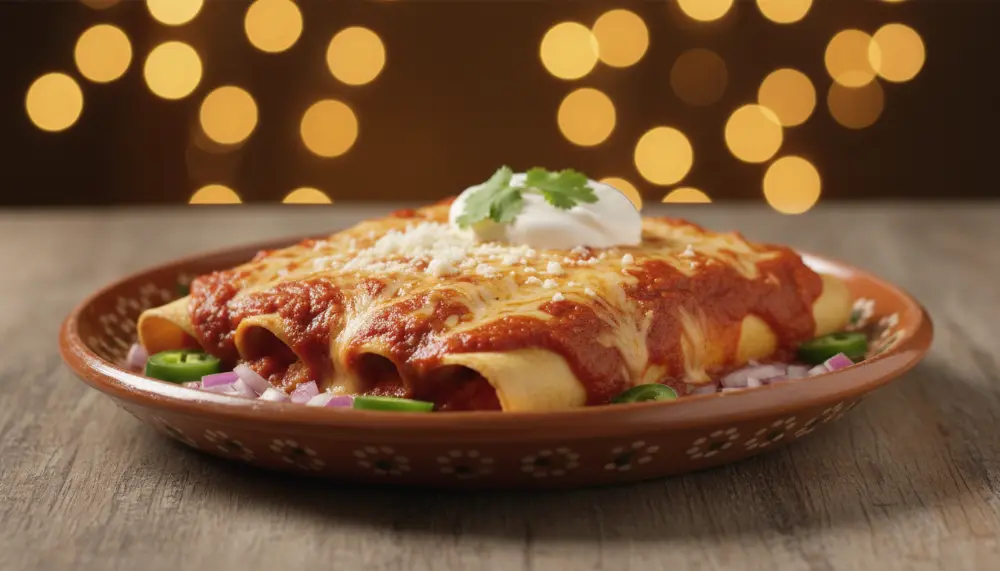
Master the art of creating restaurant-quality Chicken Enchiladas with this comprehensive guide that honors traditional techniques while respecting modern dietary preferences. This recipe delivers a symphony of smoky chiles, tender poultry, and melted cheese, ensuring a perfect result every time you step into the kitchen.
Authentic Red Sauce Chicken Enchiladas
Ingredients
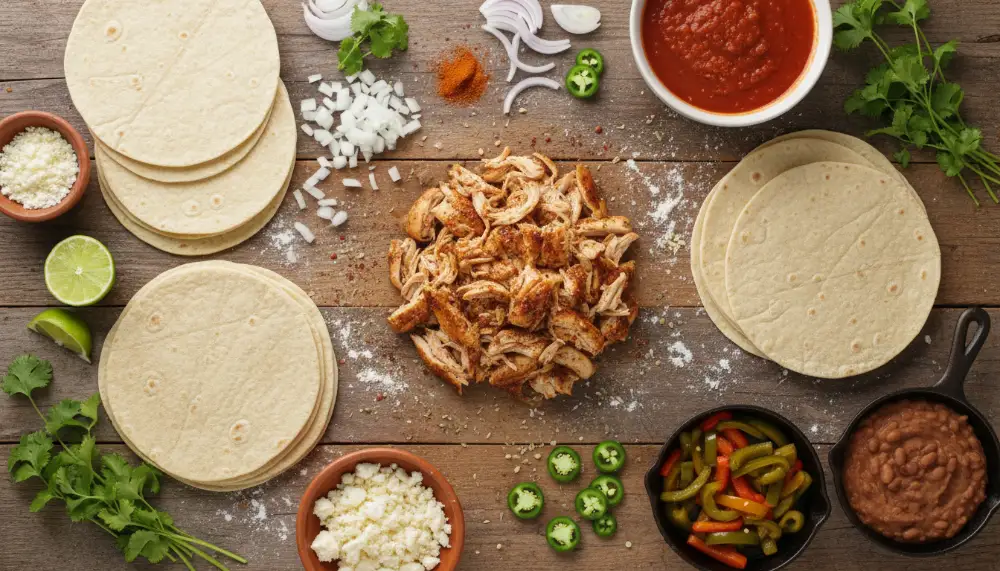
- 1 3 cups shredded cooked chicken breast
- 2 12 corn tortillas
- 3 2 cups red enchilada sauce (recipe below)
- 4 2 cups shredded Monterey Jack cheese
- 5 1/4 cup beef tallow (for tortilla frying)
- 6 1 small white onion, finely diced
- 7 1/2 cup fresh cilantro, chopped
- 8 1 cup beef broth (for sauce base)
Instructions
- 1 Preheat your oven to 375°F (190°C) and lightly grease a 9×13 baking dish with beef tallow.
- 2 Heat beef tallow in a small skillet over medium heat. Quickly dip each corn tortilla for 5 seconds per side to soften and create a moisture barrier.
- 3 In a large bowl, mix the shredded chicken with 1/2 cup of the red sauce and half of the diced onions.
- 4 Dip a softened tortilla into the remaining warm sauce, place a portion of chicken filling inside, roll tightly, and place seam-side down in the dish.
- 5 Pour the remaining sauce over the rolled tortillas and top generously with Monterey Jack cheese.
- 6 Bake for 20-25 minutes until the cheese is bubbly and slightly golden. Garnish with fresh cilantro and remaining onions before serving.
The Cultural Significance and Evolution of Chicken Enchiladas
To truly appreciate Chicken Enchiladas, one must look back at the rich tapestry of Mexican history. The dish finds its origins in the valley of Mexico, where indigenous people practiced the art of wrapping small fish or meat in corn tortillas. The word enchilada comes from the Spanish term “enchilar,” which literally translates to “to season with chili.” This fundamental concept, a tortilla bathed in a chili-based sauce, is the bedrock of what we now consider a global comfort food staple. Over centuries, these humble beginnings evolved through the influence of the Spanish conquest and subsequent regional adaptations, leading to the sophisticated variations we enjoy today in our modern best mexican recipes collections.
Authenticity in making Chicken Enchiladas requires a commitment to specific ingredients that define the flavor profile. While Tex-Mex variations often rely on ground beef and processed yellow cheeses, the traditional Mexican approach emphasizes the relationship between the corn, the chili, and the protein. In our high-authority preparation, we focus on the interplay of texture, ensuring the tortilla remains structural rather than mushy, and the depth of the sauce, which should be vibrant, smoky, and complex. By understanding these foundations, home cooks can elevate their Chicken Enchiladas from a simple weeknight dinner to a culinary masterpiece that would be at home in any Oaxacan kitchen.
The Art of the Tortilla: Choosing and Preparing Your Base
The soul of any Chicken Enchiladas dish lies in the tortilla. While flour tortillas are popular in Northern Mexico and parts of the United States, traditional enchiladas almost exclusively utilize corn tortillas. The corn provides a nutty, earthy base that stands up to the heavy, spicy sauces. However, the biggest challenge many cooks face is the “mushy tortilla syndrome.” To prevent this, we employ a professional technique known as the “raincoat method.” By lightly frying the tortilla in a high-quality fat, you create a waterproof barrier that allows the tortilla to soak up the flavor of the sauce without losing its structural integrity.
In keeping with strict dietary requirements, we avoid the use of pork lard. Instead, we highly recommend using high-quality beef tallow or a neutral avocado oil. Beef tallow provides a savory depth that perfectly complements the poultry, mimicking the richness of traditional fats without violating dietary restrictions. When preparing your tortillas, ensure the fat is hot enough to sizzle but not so hot that it crisps the tortilla into a chip. You want it pliable but sealed. This extra step is the hallmark of a high-authority recipe and distinguishes professional Chicken Enchiladas from amateur attempts.
Crafting the Ultimate Red Chili Sauce Without Alcohol
A common misconception in modern cooking is that a complex red sauce requires wine or beer for depth. In traditional Mexican cooking, the complexity comes from the chiles themselves. For a truly high-authority red sauce for your Chicken Enchiladas, we recommend using a blend of dried Guajillo and Ancho chiles. Guajillo chiles provide a bright, tangy heat, while Ancho chiles (dried poblanos) offer a deep, raisin-like sweetness and smoky undertone. To prepare these, you must toast them lightly on a dry skillet before rehydrating them in hot beef broth, never use water, as broth adds essential minerals and savory notes.
To achieve a perfectly smooth consistency, the rehydrated chiles, along with garlic, onions, and spices like cumin and Mexican oregano, should be blended at high speed. We recommend using the Ninja BN751 Professional Plus DUO Blender because its 1000W motor can pulverize the tough skins of the dried chiles, resulting in a velvet-like sauce that coats the back of a spoon. To replace the acidity usually provided by wine, a splash of apple cider vinegar or a squeeze of fresh lime juice toward the end of the simmering process will brighten the flavors and balance the earthy heat of the peppers. This ensures your Chicken Enchiladas have a professional, balanced flavor profile without the need for alcohol.
Protein Preparation: From Poaching to Shredding
The filling of your Chicken Enchiladas should be just as carefully considered as the sauce. For the most tender results, avoid roasting the chicken, which can lead to dry fibers. Instead, poach whole chicken breasts in a seasoned liquid of beef broth, onion halves, smashed garlic, and bay leaves. This poaching method ensures the meat remains succulent and absorbs the aromatics from the liquid. Once the chicken is cooked through, it should be shredded rather than diced. Shredded meat has a much larger surface area, allowing it to trap the enchilada sauce and cheese within its fibers, resulting in a more cohesive bite.
For those managing large batches or looking for a professional finish, the Cuisinart 8 Cup Food Processor is an essential tool. Using the pulse function with the plastic dough blade or a few quick pulses with the metal blade can shred several pounds of chicken in seconds, providing a uniform texture that is difficult to achieve by hand with forks. If you are looking for a deeper flavor, you can even use the Cosori 9-in-1 TurboBlaze Air Fryer 6 Qt to lightly roast your onions and garlic before adding them to the chicken mix, providing a charred, smoky element that elevates the entire dish.
Assembly and Baking: The Final Transformation
Assembling Chicken Enchiladas is a rhythmic process that requires a dedicated workspace. Dip, fill, roll, repeat. To ensure your enchiladas don’t stick to the pan, always spread a thin layer of sauce on the bottom of the baking dish first. This creates a “non-stick” environment and flavors the bottom of the tortillas. When rolling, don’t overstuff; a standard corn tortilla can comfortably hold about two to three tablespoons of filling. Placing them seam-side down is critical to prevent them from unfurling during the baking process. Once the dish is full, a final generous coating of sauce and a thick layer of Monterey Jack cheese will provide the perfect melt.
Baking is not just about heating the dish through; it is about the marriage of flavors. The 20 minutes in the oven allows the sauce to penetrate the outer layer of the tortilla while the cheese creates a protective, bubbly crust on top. If you find yourself with leftovers, storing them properly is key to maintaining quality. We recommend the Rubbermaid Brilliance Glass Storage Set of 9, as the leak-proof seals and glass construction allow you to reheat the Chicken Enchiladas in the microwave or oven without the risk of the tortillas drying out or the sauce staining the container. This makes for an excellent meal-prep option for busy families.
Garnishing for Authority: The Professional Finish
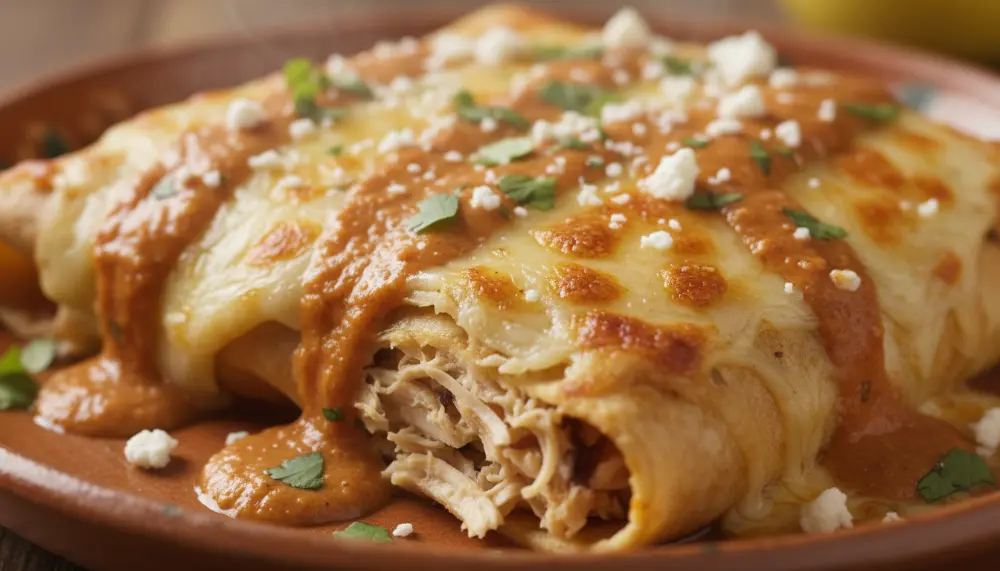
The difference between a home-cooked meal and a chef-standard plate often lies in the garnishes. For Chicken Enchiladas, garnishes serve two purposes: adding fresh texture and providing a cooling contrast to the spice. Authenticity dictates the use of thinly sliced white onions, which have a sharper, cleaner bite than yellow onions, and fresh cilantro. A drizzle of Mexican crema (or a high-quality sour cream thinned with a little lime juice) adds the necessary fat to balance the capsaicin in the chiles. Crumbled Queso Fresco can also be added for a salty, tangy finish that doesn’t melt, providing a lovely visual contrast.
For more inspiration on how to host the perfect dinner party with these techniques, explore our dinner party menu ideas. Remember that Chicken Enchiladas are a heavy dish, so they pair best with lighter sides like a crisp cabbage slaw or a simple citrus-dressed salad. By following these high-authority steps, from the selection of the chiles to the precision of the shred, you are not just making a meal; you are preserving a culinary tradition while creating a new favorite for your own table. The lack of pork and alcohol in this recipe proves that you don’t need restricted ingredients to achieve a world-class flavor profile that appeals to everyone.